TSI AdditiveLab.
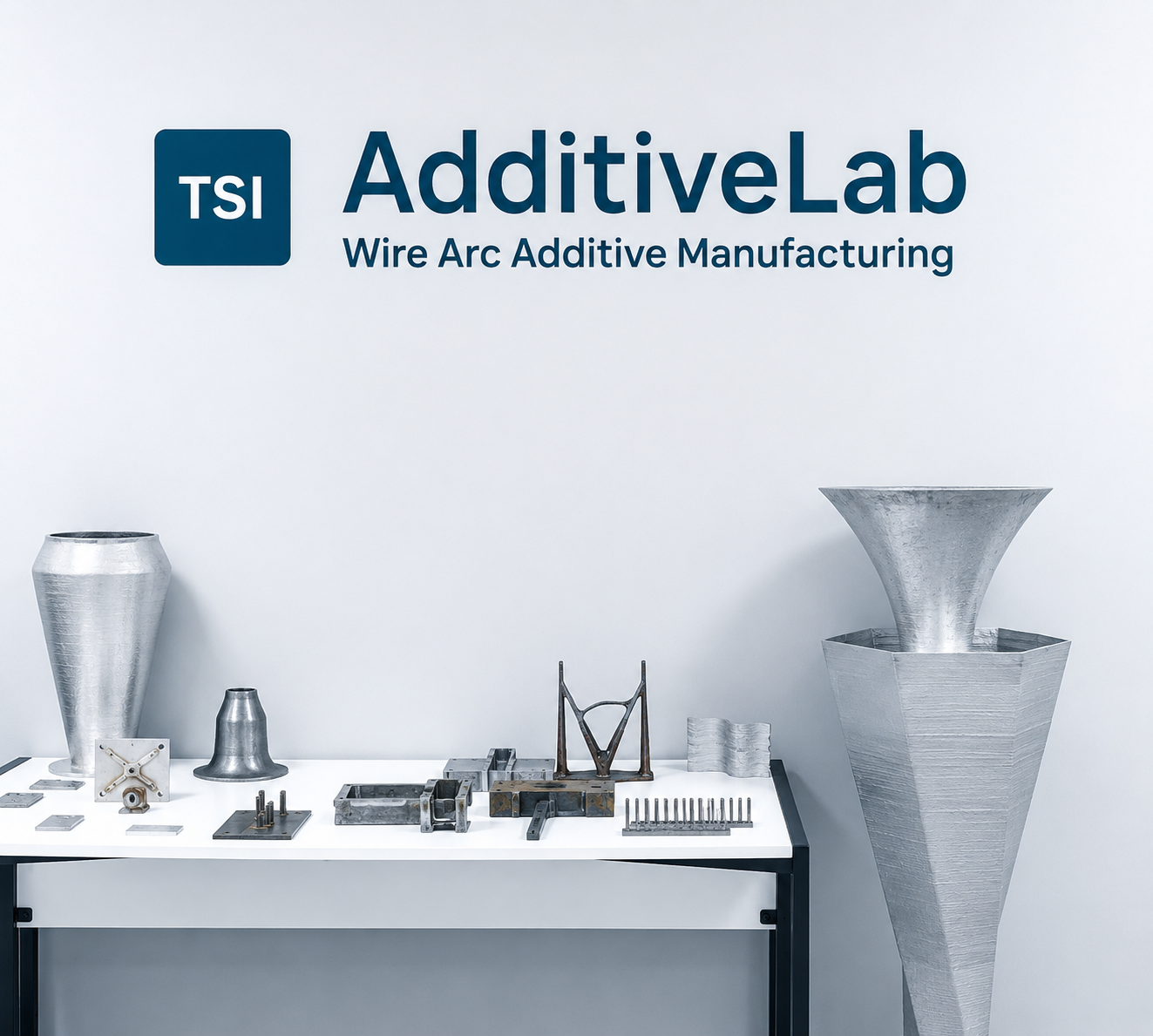
AdditiveLab is a dedicated research and development (R&D) unit within the Transport and Telecommunication Institute. We specialize in metal wire additive manufacturing, robotic welding, and industrial automation. We transform academic research into practical industrial solutions—engineering everything from initial hardware concepts to custom software implementation.
Core Research Pillars
Metal wire additive manufacturing is still an emerging technology. Bringing it up to strict industrial standards requires solving complex, real-world engineering problems.
Additive Technologies & Material Behavior
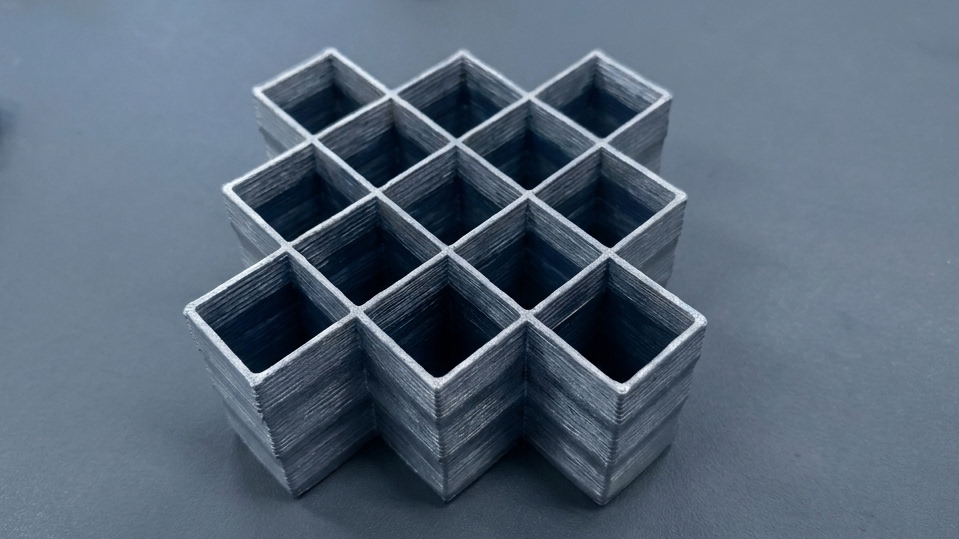
Process understanding, technology capabilities, and materials behavior. Investigating printed structure formation, quality, and specific printing possibilities across different deposition processes and materials.
Adaptive Robotics & Process Control
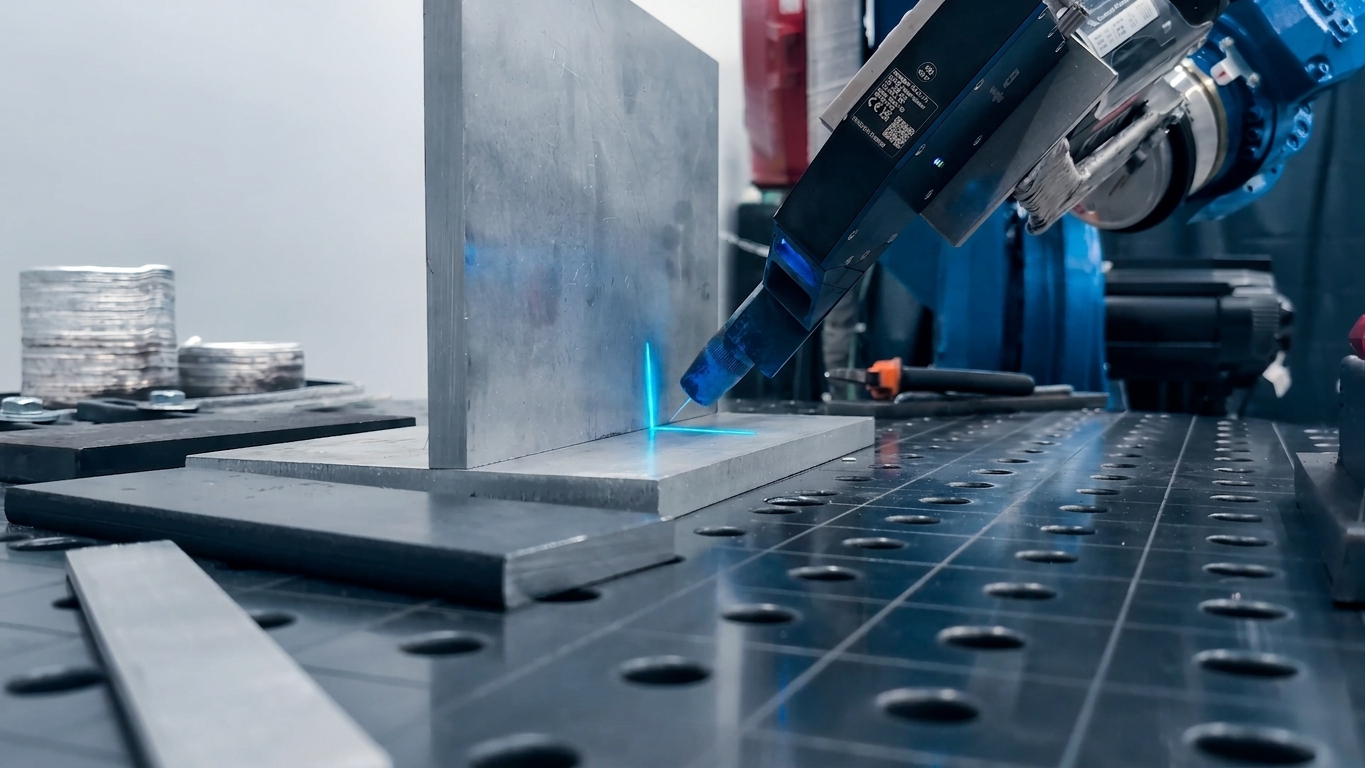
Advanced sensing, dynamic coordinate mapping, and logical feedback control to ensure process stability in variable manufacturing environments.
Industrial Software & Sensor Analytics
Development of custom software architectures for high-frequency data acquisition, sensor synchronization, and comprehensive process analysis.
Material Characterization & Optimization
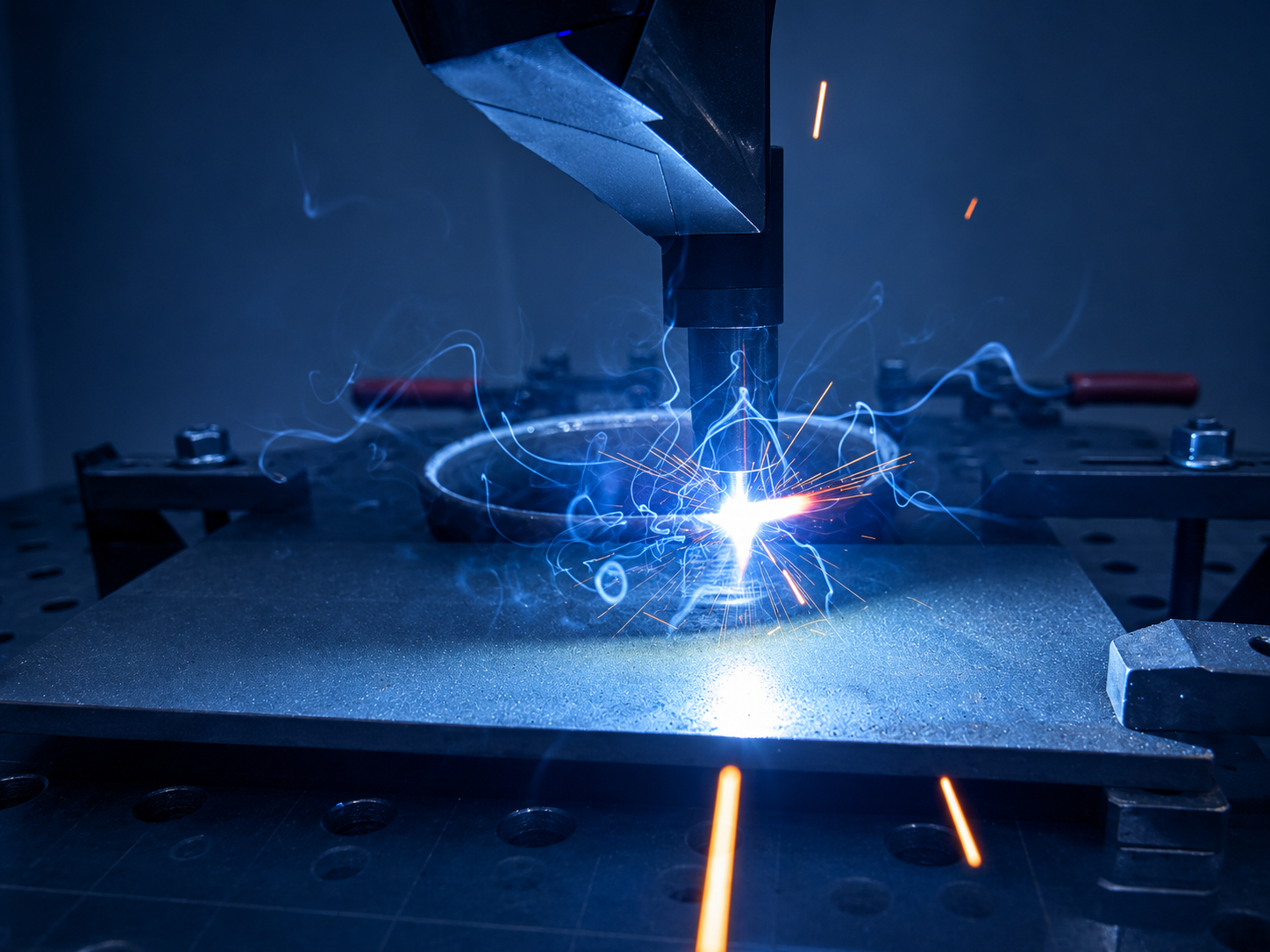
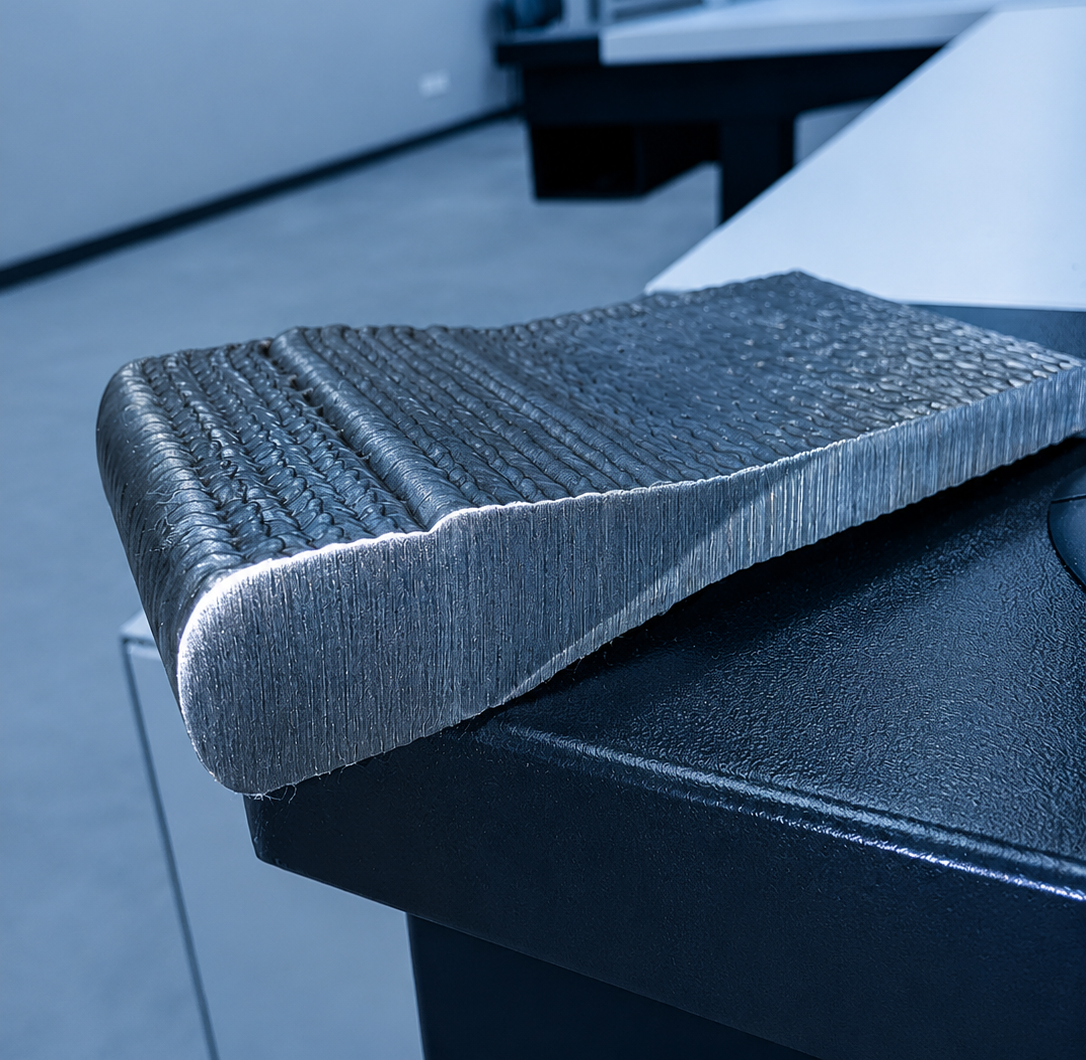
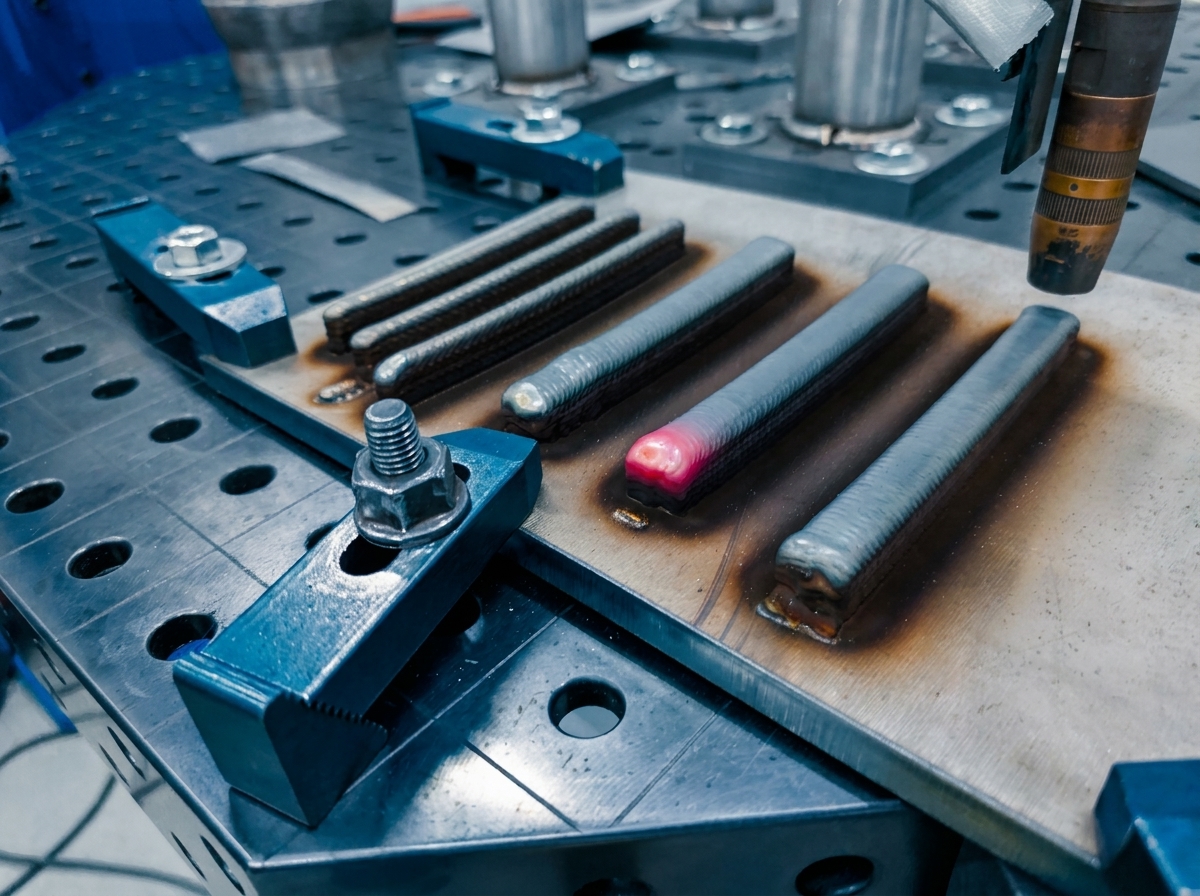
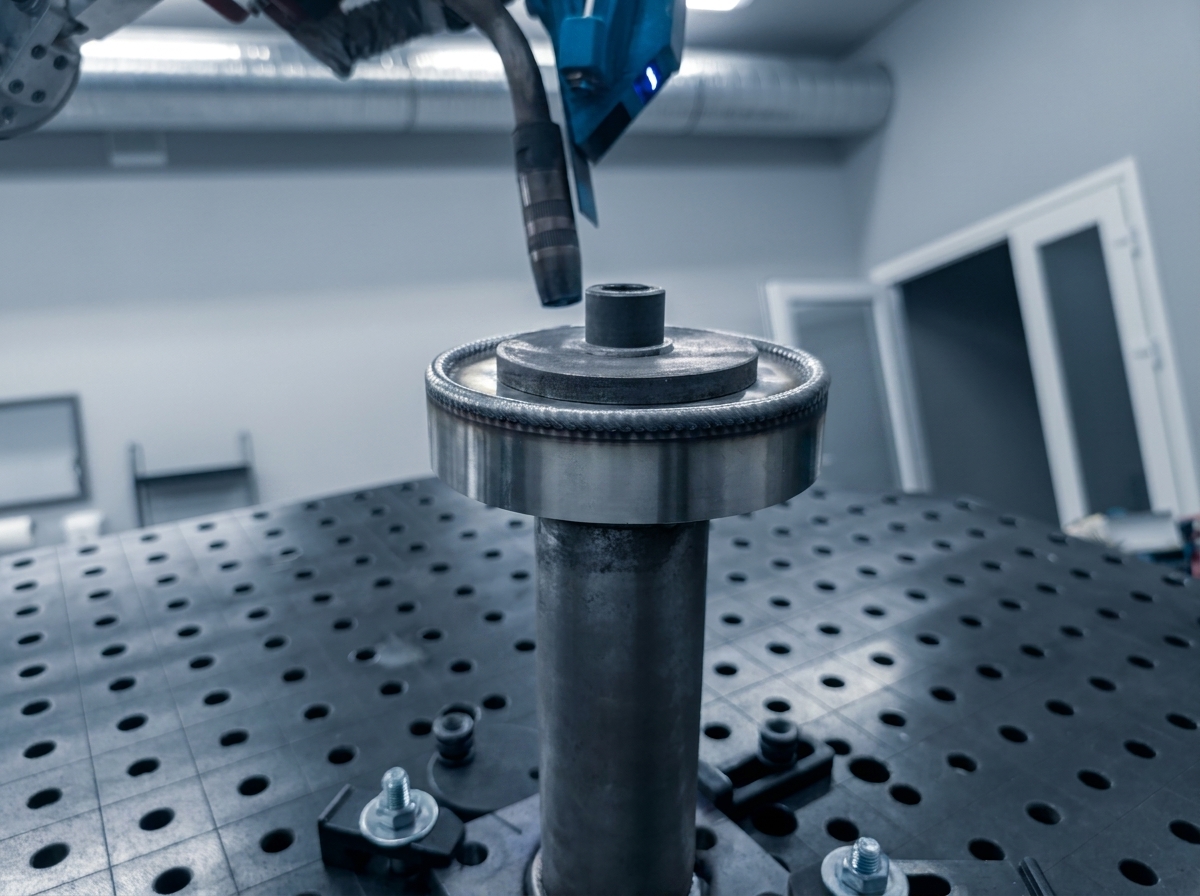
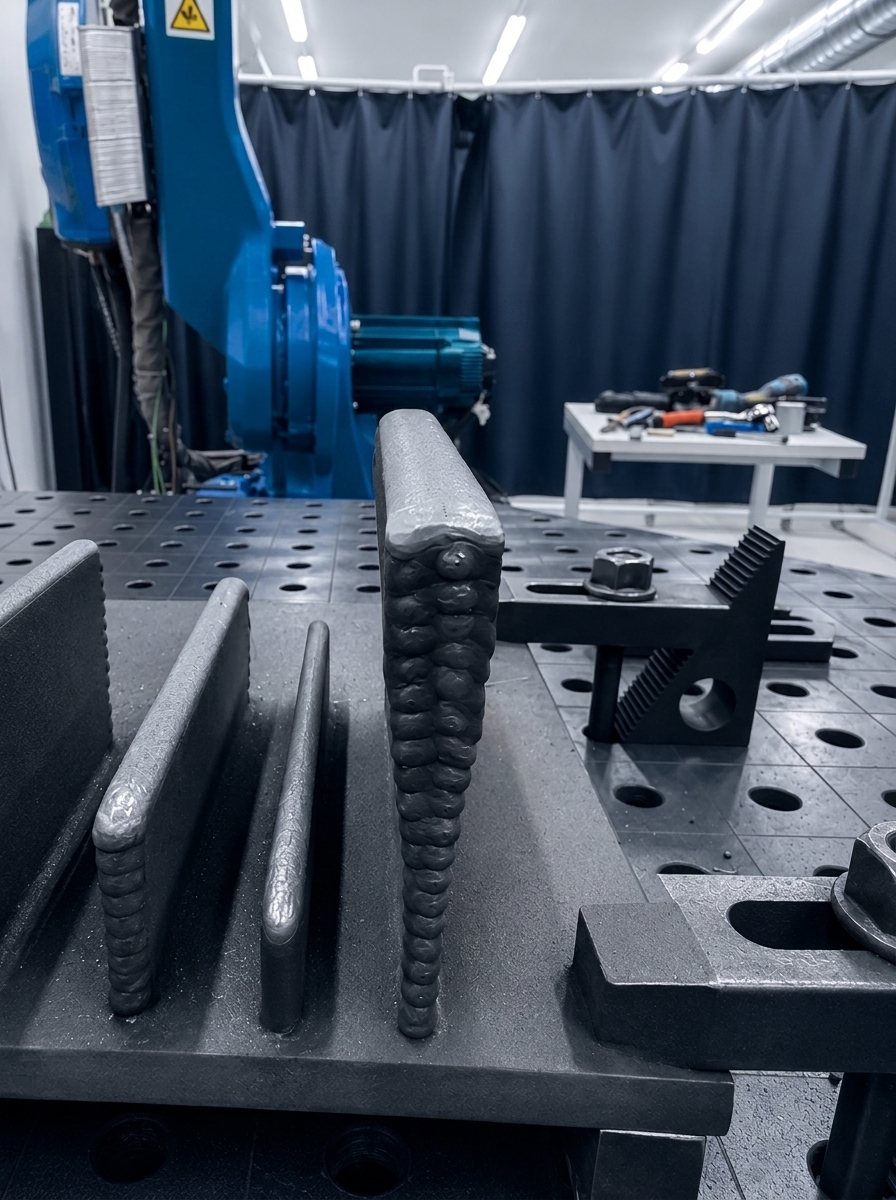
Transforming wire into a reliable structural component requires an in-depth understanding of material behavior during deposition. This is a complex, multidisciplinary challenge that demands rigorous testing and verification before integration into industrial-grade processes. Key focus areas include:
Materials
Adaptive Control Systems
Operating complex robotic systems requires moving beyond purely rigid paths. By collecting and evaluating environmental and process data, robotic routines are programmed to autonomously adapt to physical deviations and thermal states. Key focus areas include:
Sensors
Custom Software Architectures
Managing complex manufacturing operations requires handling massive, simultaneous streams of process data. Custom software architectures are developed to synchronize robot telemetry, power source signals, and external sensor feeds into a cohesive environment for continuous monitoring, dynamic control, and post-process analysis. Key focus areas include:
Software
Recent Peer-Reviewed Publications
Experimental optimization of robotic CMT welding for 0.5 mm AISI
Arsenii Kisarev, Vasilijs Vilks, Manu Vilks, Igors Volohovs, et al.
menu_book Read PublicationExperimental Analysis of Stability Mechanism of Laser Wire Based 3d Printing with 316LSi Steel
Vasilijs Vilks, Manu Vilks, Arsenii Kisarev, Igors Volohovs, Timofejs Onišuks
menu_book Read PublicationAdditiveLab Services
Industrial Metal 3D Printing
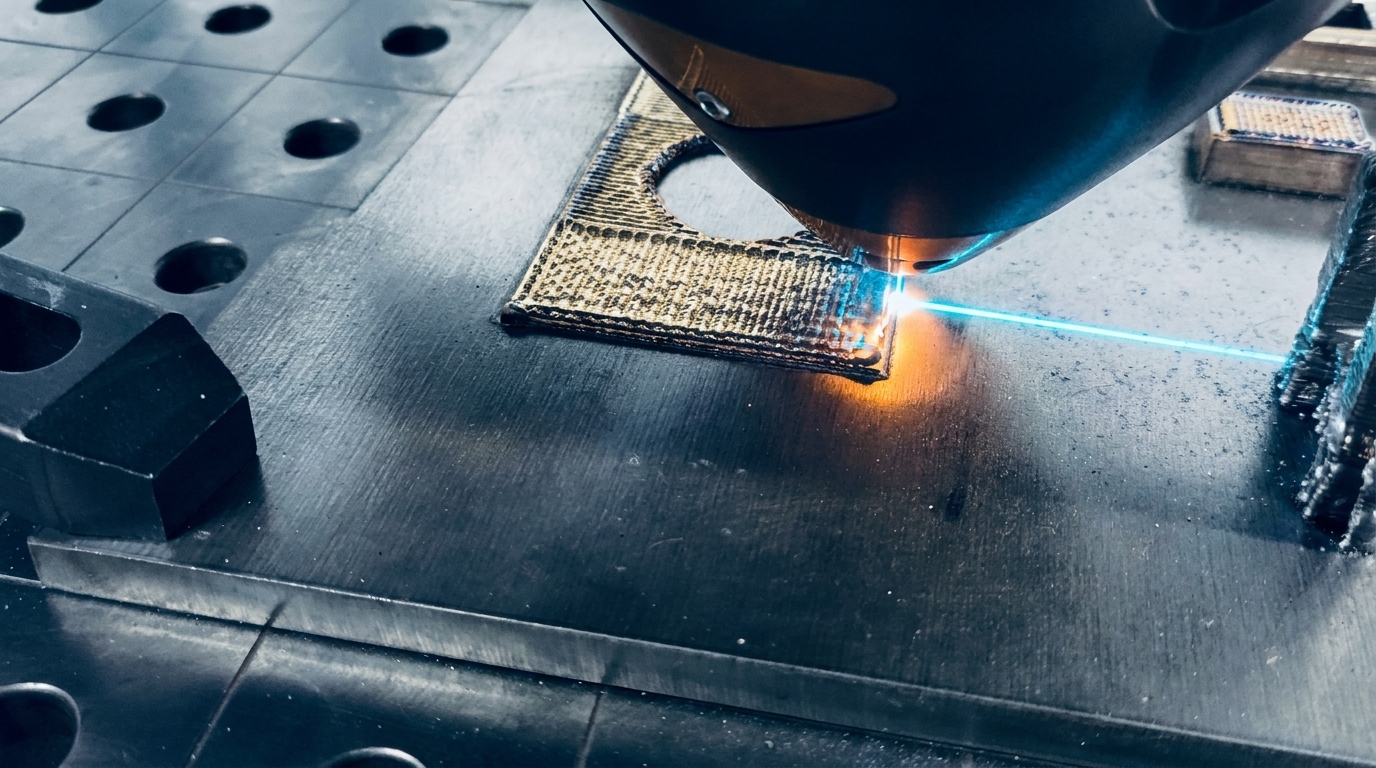
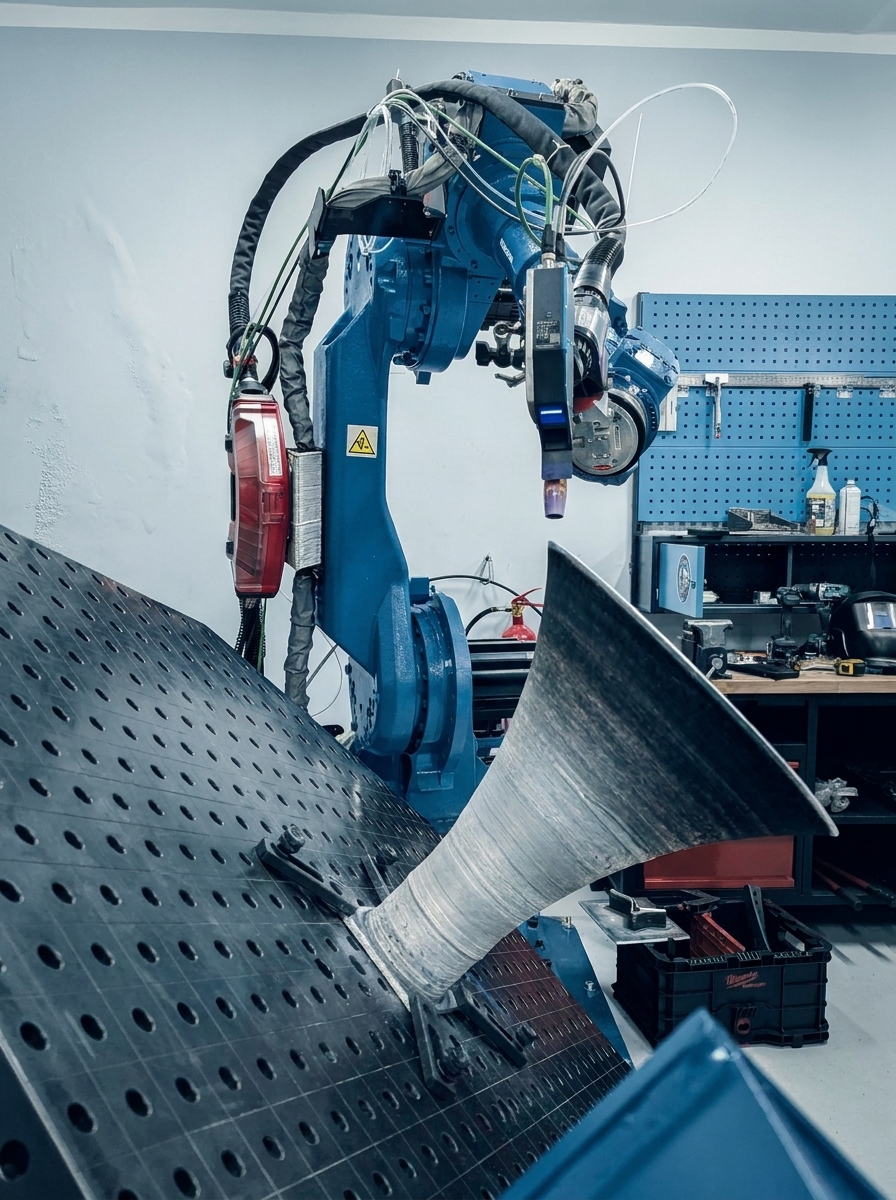
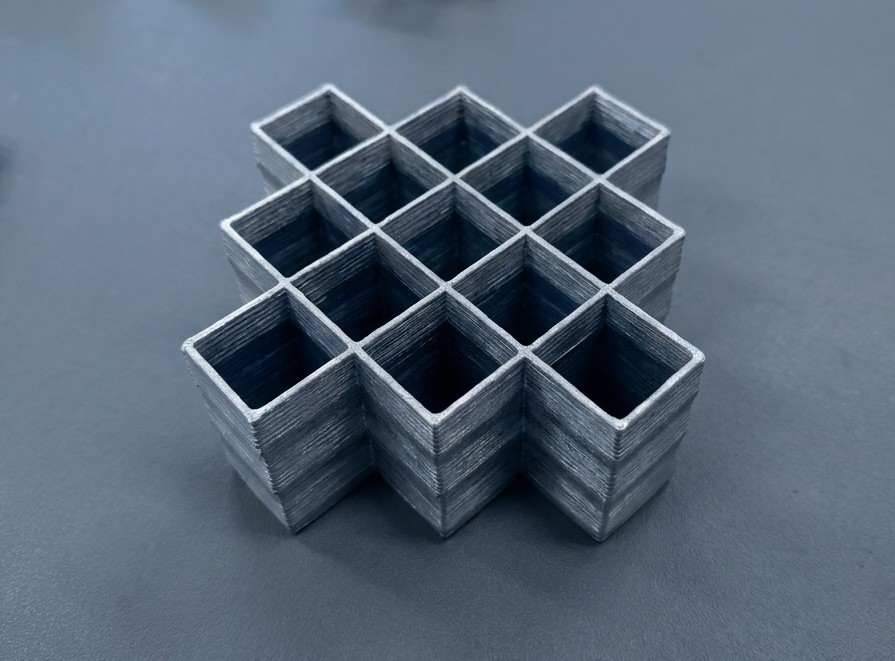
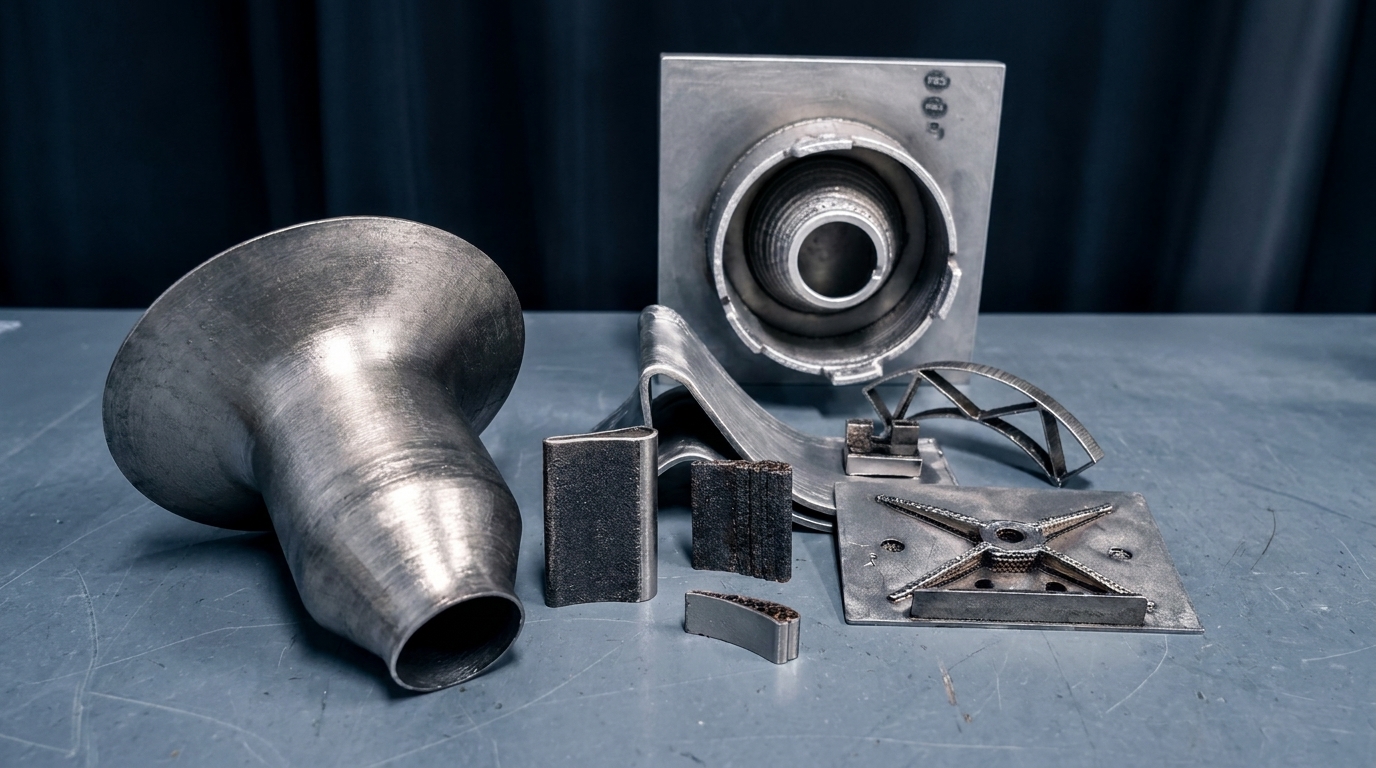
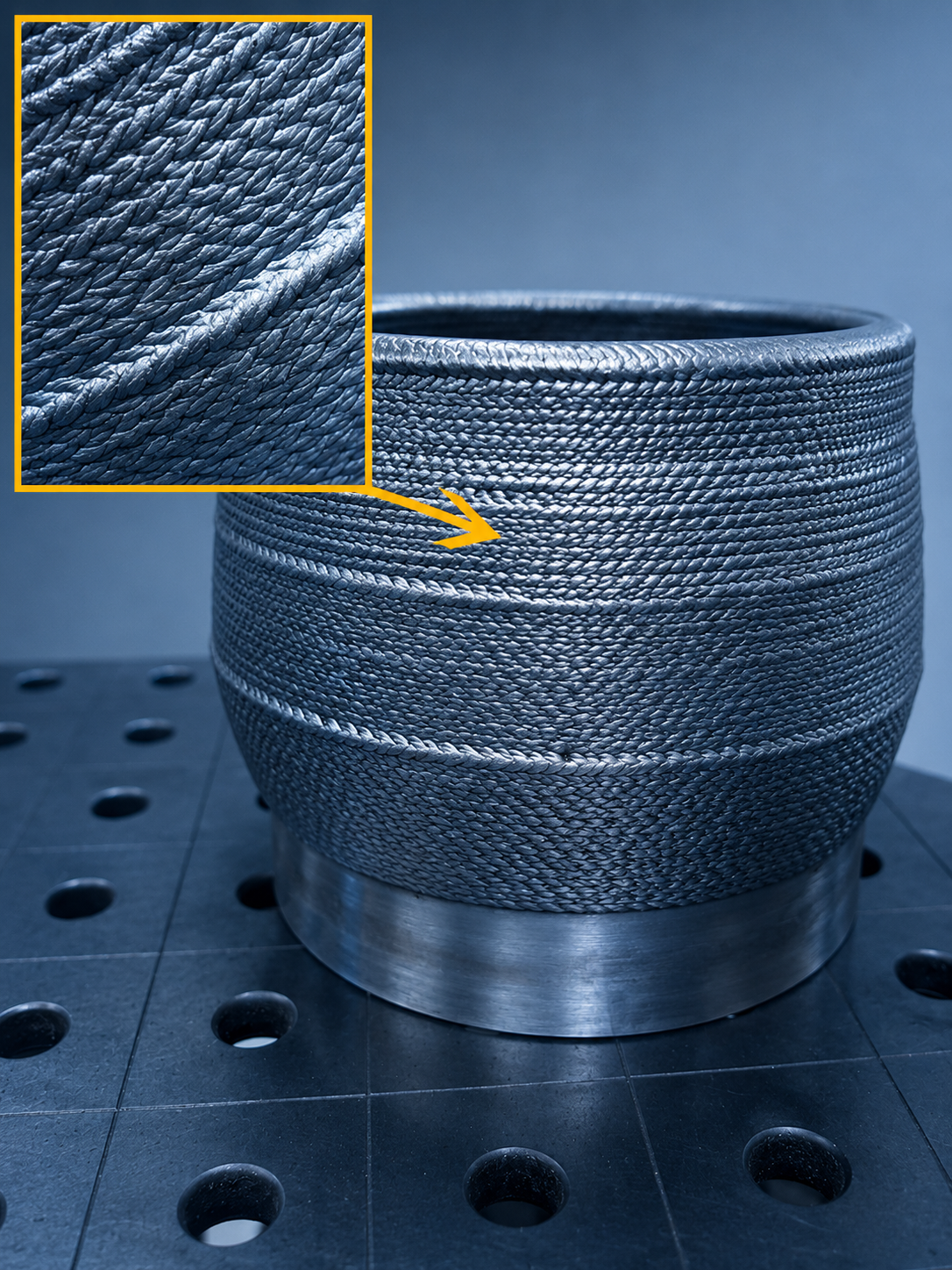
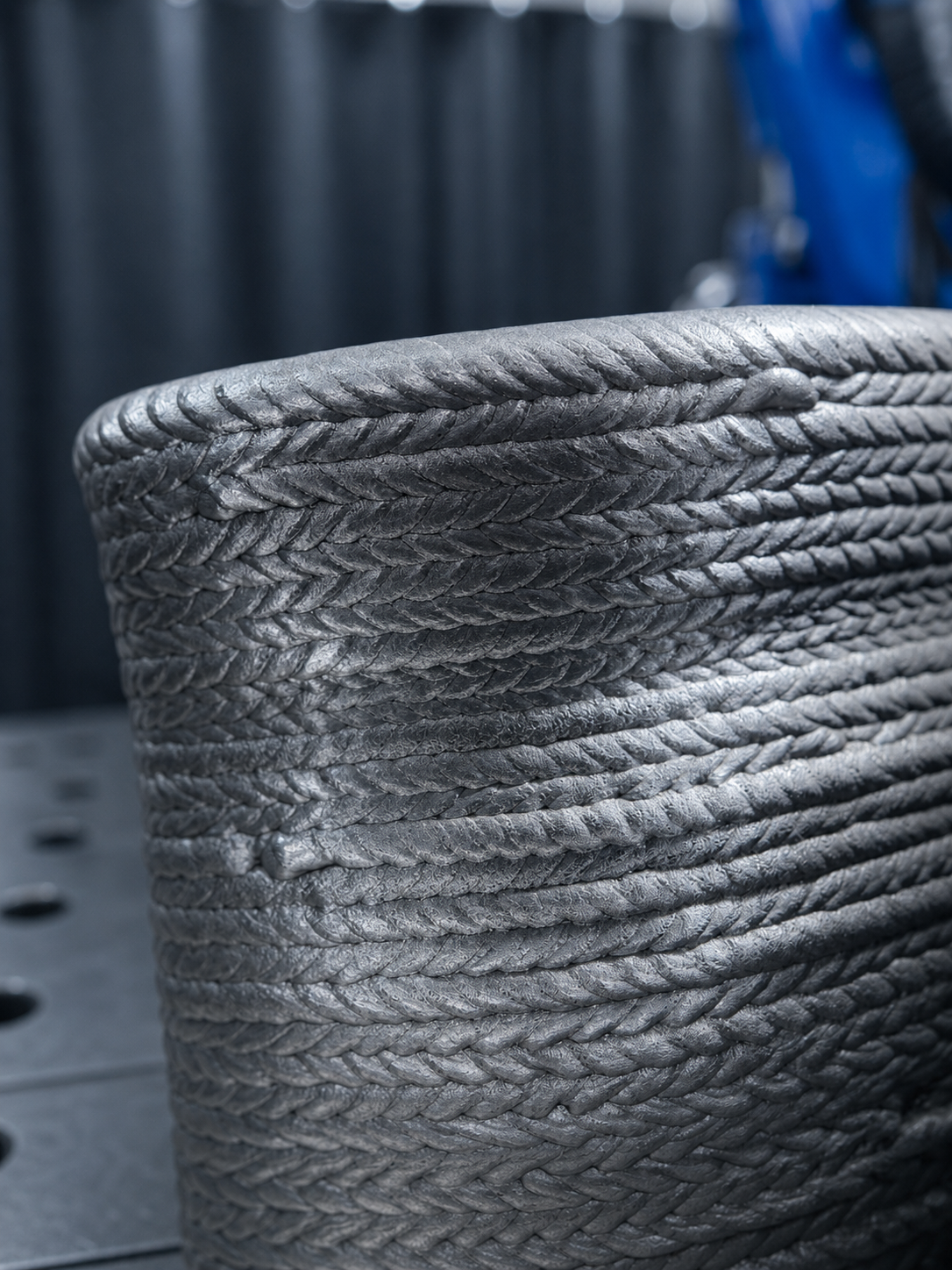
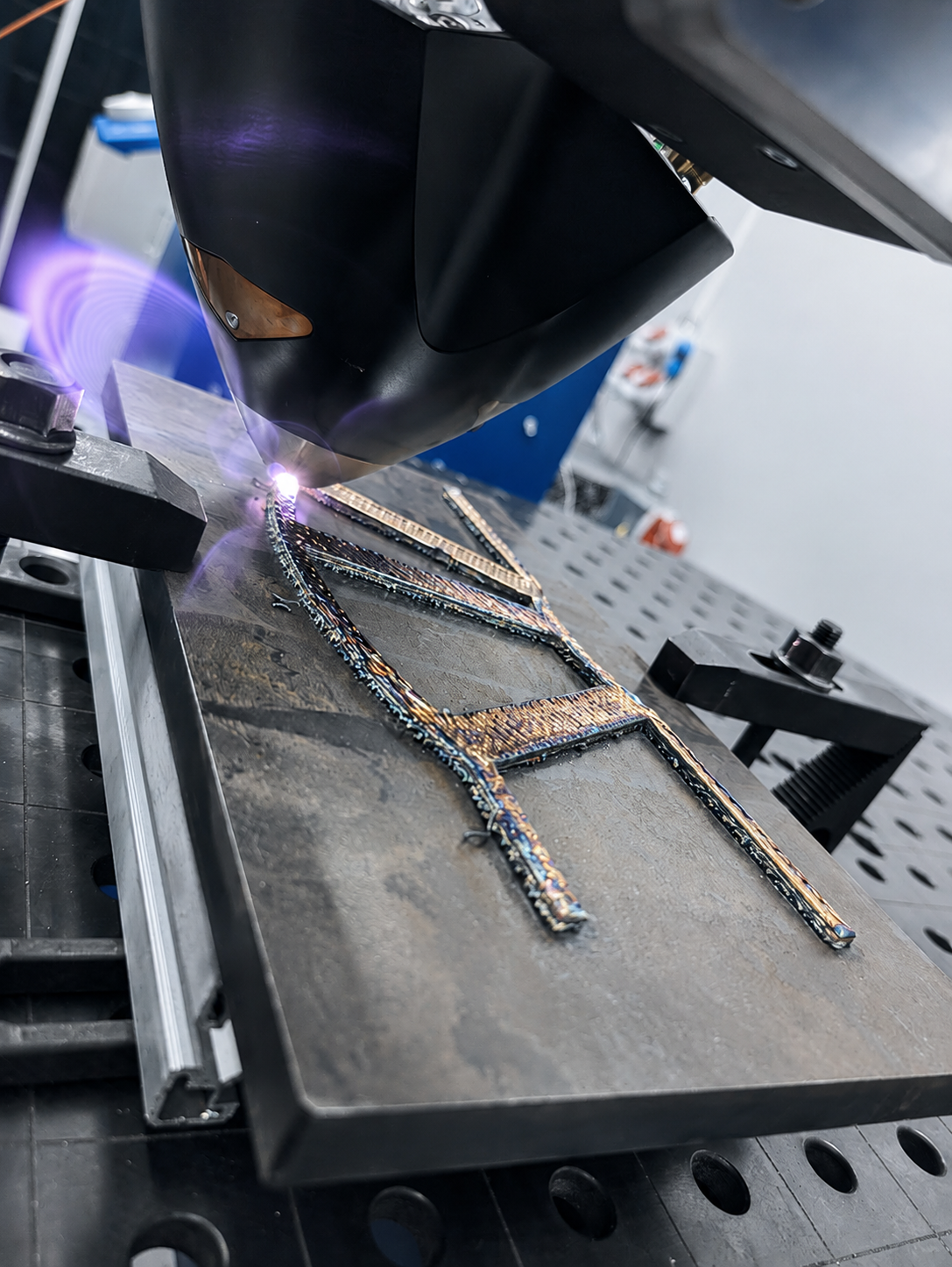
Manufacturing of metal parts directly from digital models using Wire Arc (WAAM) and Wire Laser (WLAM) technologies. Production can be executed within our laboratory, or a complete printing complex can be installed directly at the client's site. All manufacturing adheres to strict industrial standards, ensuring structural reliability and full process traceability.
Features
- • Dual-technology capabilities (WAAM/WLAM) to accommodate various part types, material specifications, and printing resolutions
- • Comprehensive technology selection and parameter development for prototypes and small-to-medium batches
- • Capability for producing medium to large-sized complex components
Advantages
- • Fast, accurate, and material-efficient production (high buy-to-fly ratio)
- • Verified structural quality optimized for real-world applications
- • Wide material selection, including specialized steel, nickel, and aluminum alloys
Robotic Welding
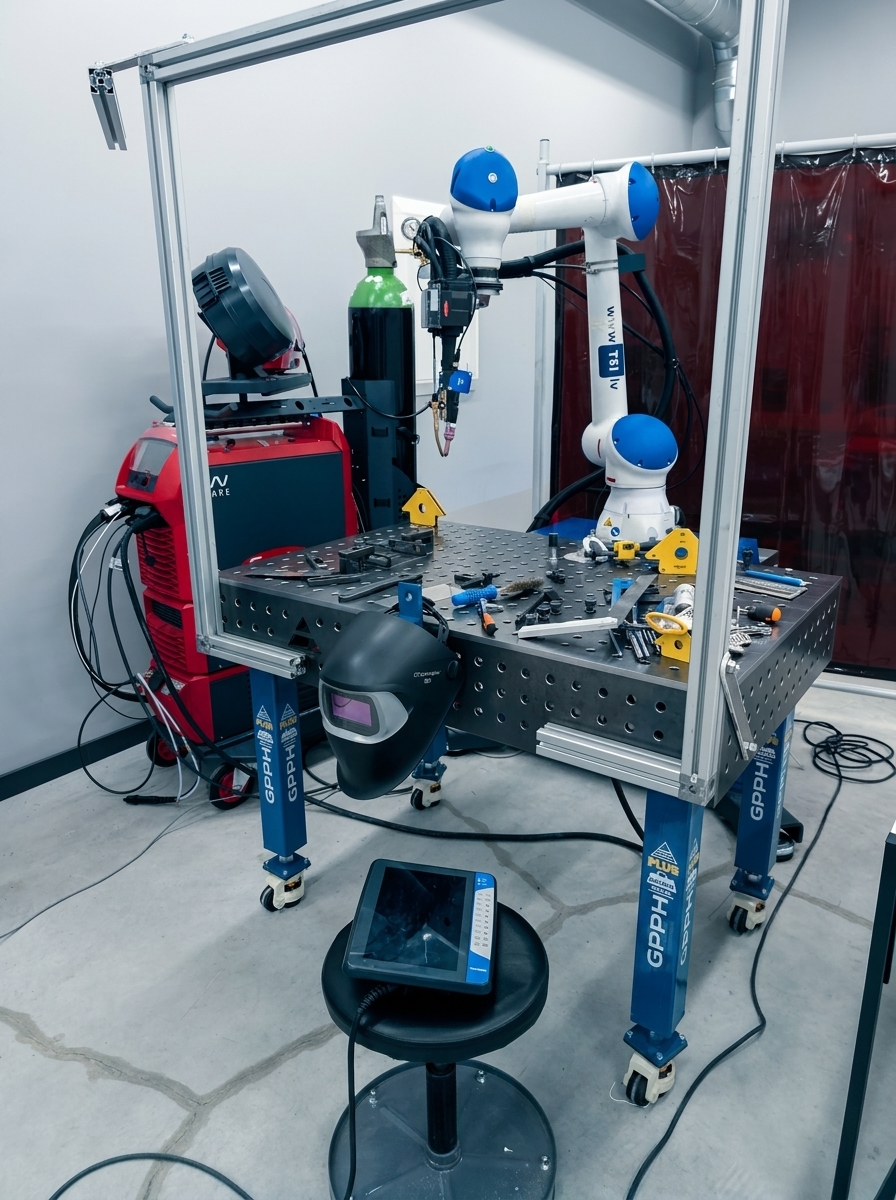
End-to-end development, verification, and commissioning of automated robotic welding solutions. Complete system integration is provided—from initial process documentation to final qualification tests—alongside comprehensive operator training bridging both welding technology and robotic control.
Features
- • Integration of industrial MIG and TIG welding technologies
- • Development of adaptive toolpaths and sensor-adjusted trajectories
- • Complete documentation and qualification test execution
Advantages
- • Seamless handover through dual-discipline operator training (welding + robotics)
- • Consistent, highly repeatable weld quality across scaled production
- • Mitigation of skilled labor shortages through reliable automation
Automation Systems
Development of custom automation logic and control architectures for specific manufacturing environments. Software and sensor integrations are engineered to upgrade existing workflows or automate complex processes where standard off-the-shelf solutions fall short.
Features
- • Multi-source sensor integration (vision, thermal, geometric)
- • Custom Human-Machine Interface (HMI) design and implementation
- • Custom hardware integration and data synchronization for existing production lines
Advantages
- • Custom-built solutions designed explicitly for non-standard production requirements
- • Complete digital transparency and process traceability
- • Reduced downtime through adaptive control and system monitoring
Our Projects
In-Situ Height Monitoring and Error Calculation for WLAM
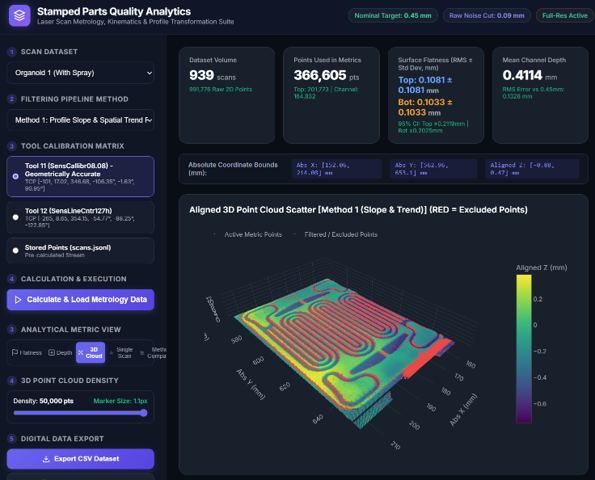
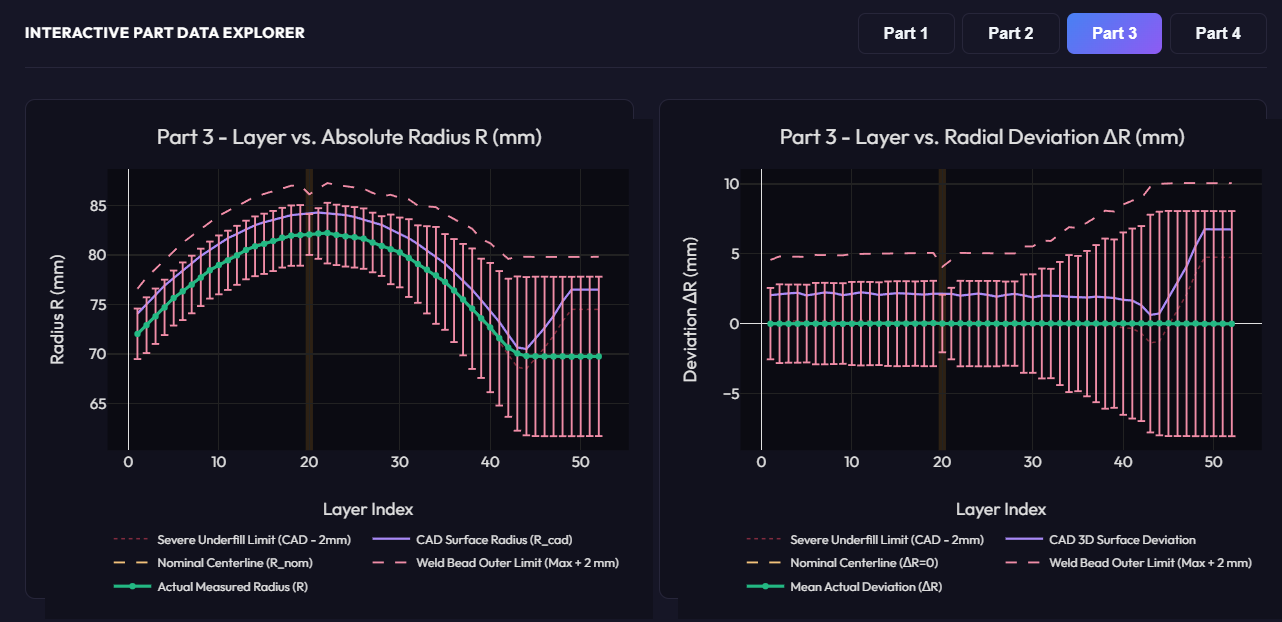
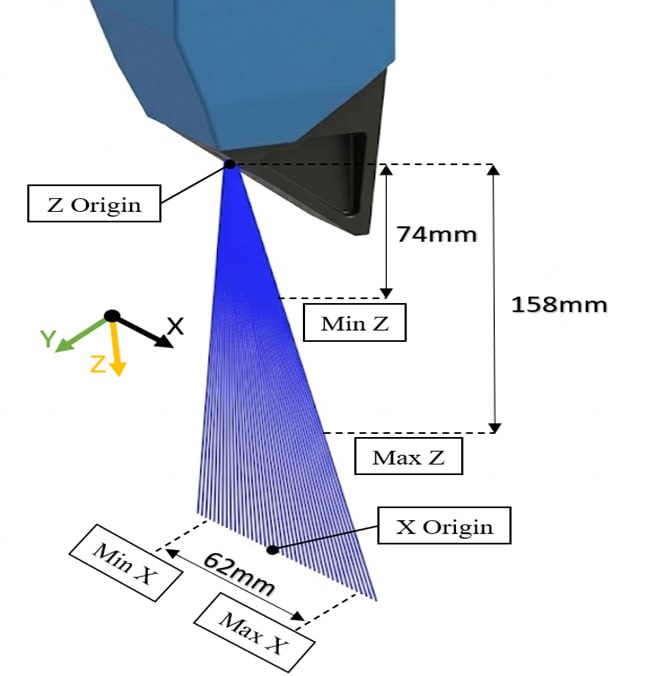
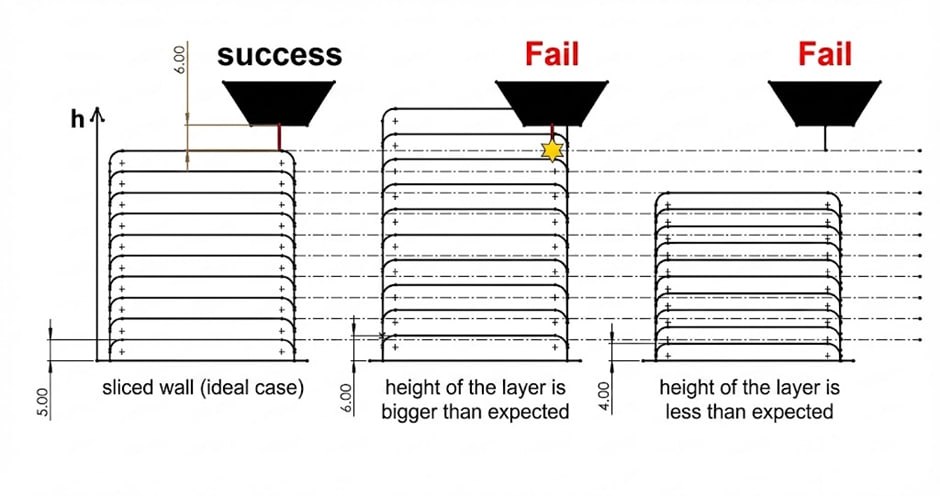
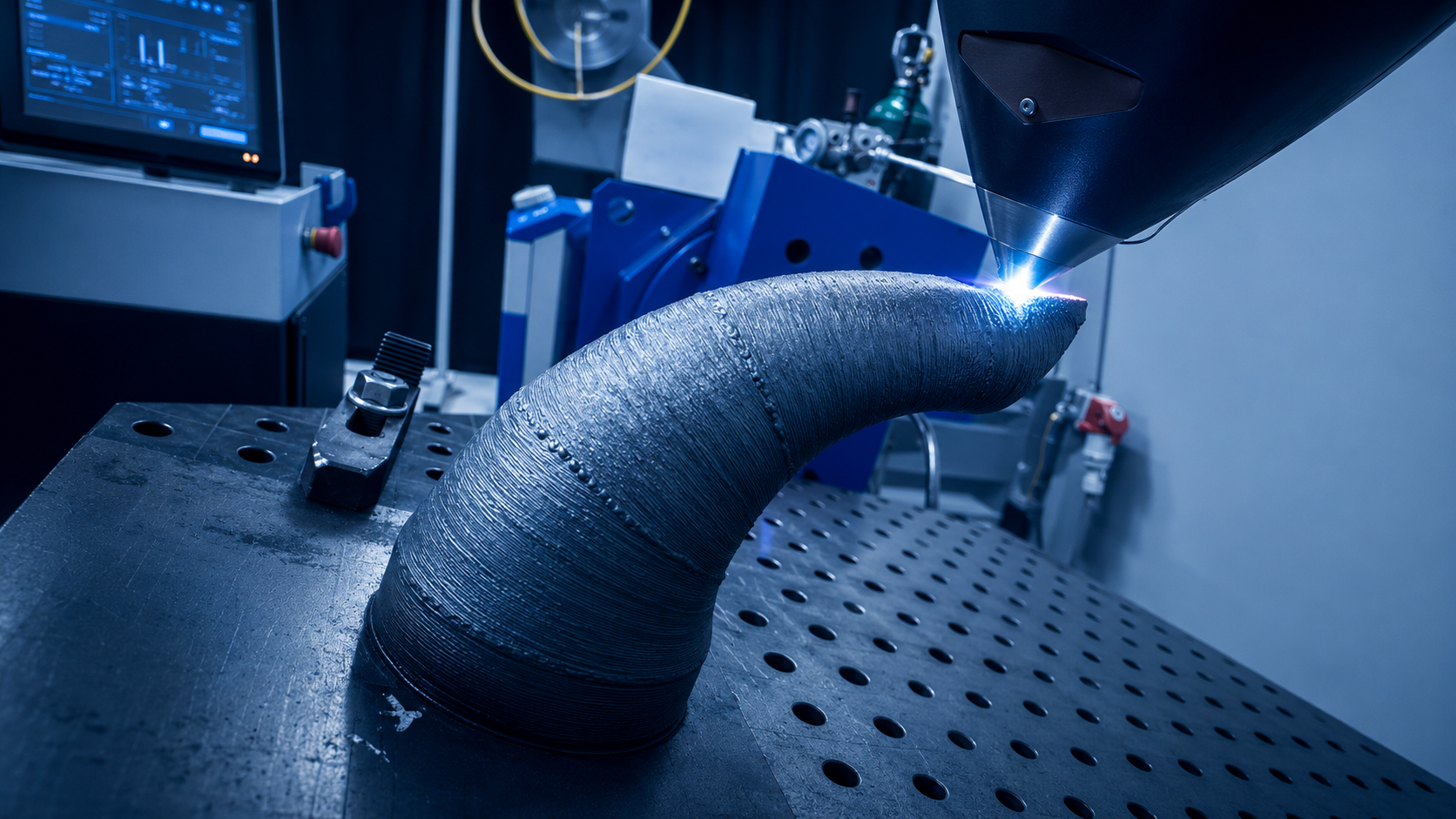
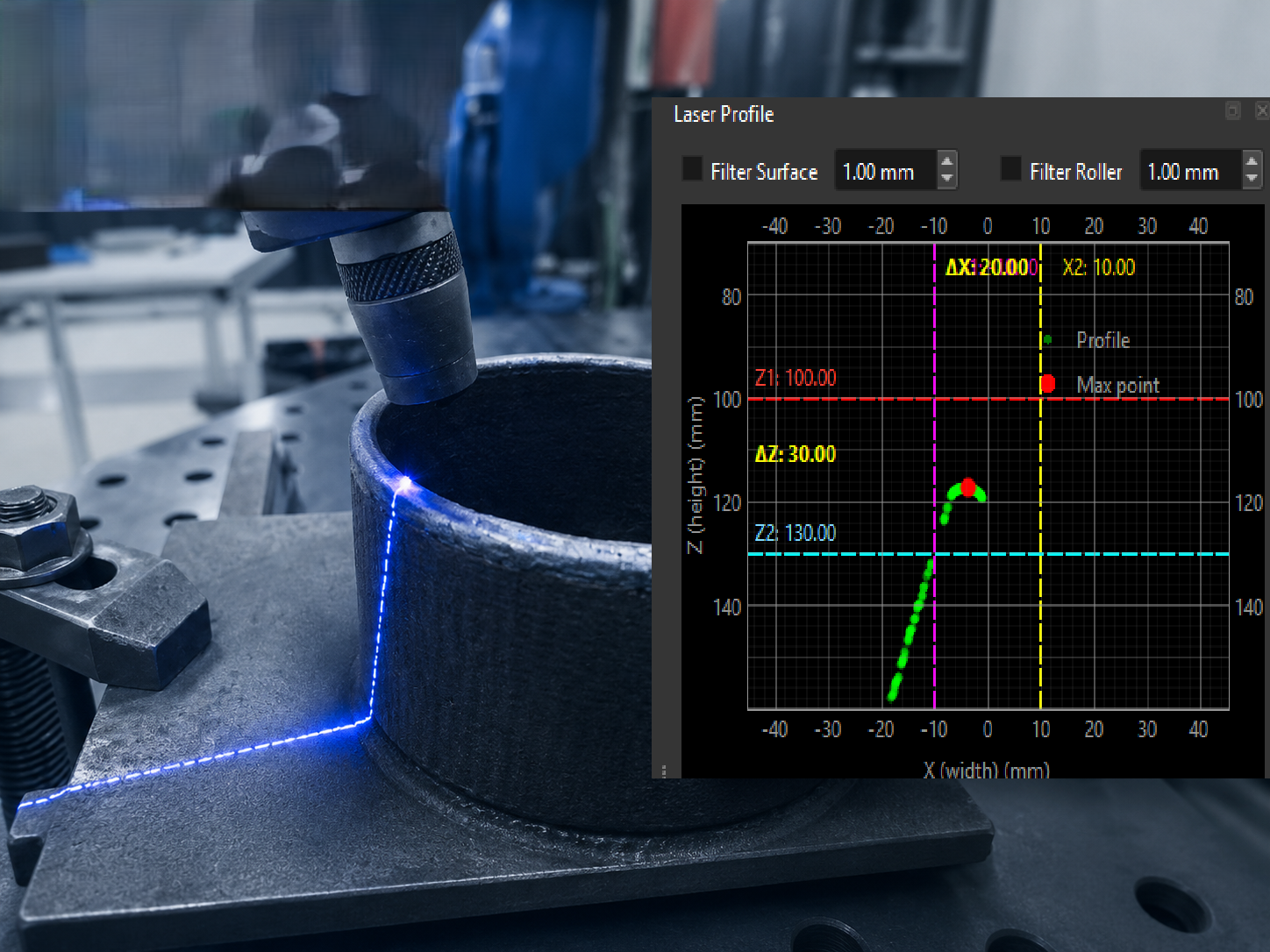
Internal R&D addressing geometric deviation in high-profile (100+ layer) Wire Laser Additive Manufacturing (WLAM). Discrepancies between programmed and actual deposition heights critically impact process stability over extended builds. This project engineered a custom data acquisition and analysis algorithm utilizing 2D profilometry to generate trustworthy error vectors for closed-loop parameter modulation.
Technical Breakdown & Project Gallery
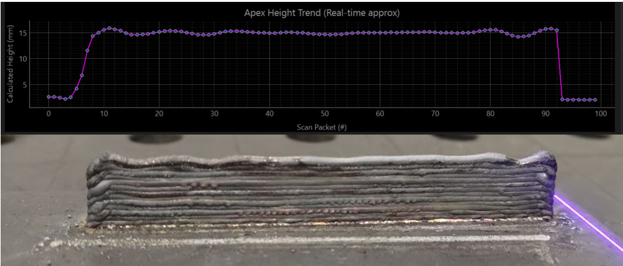
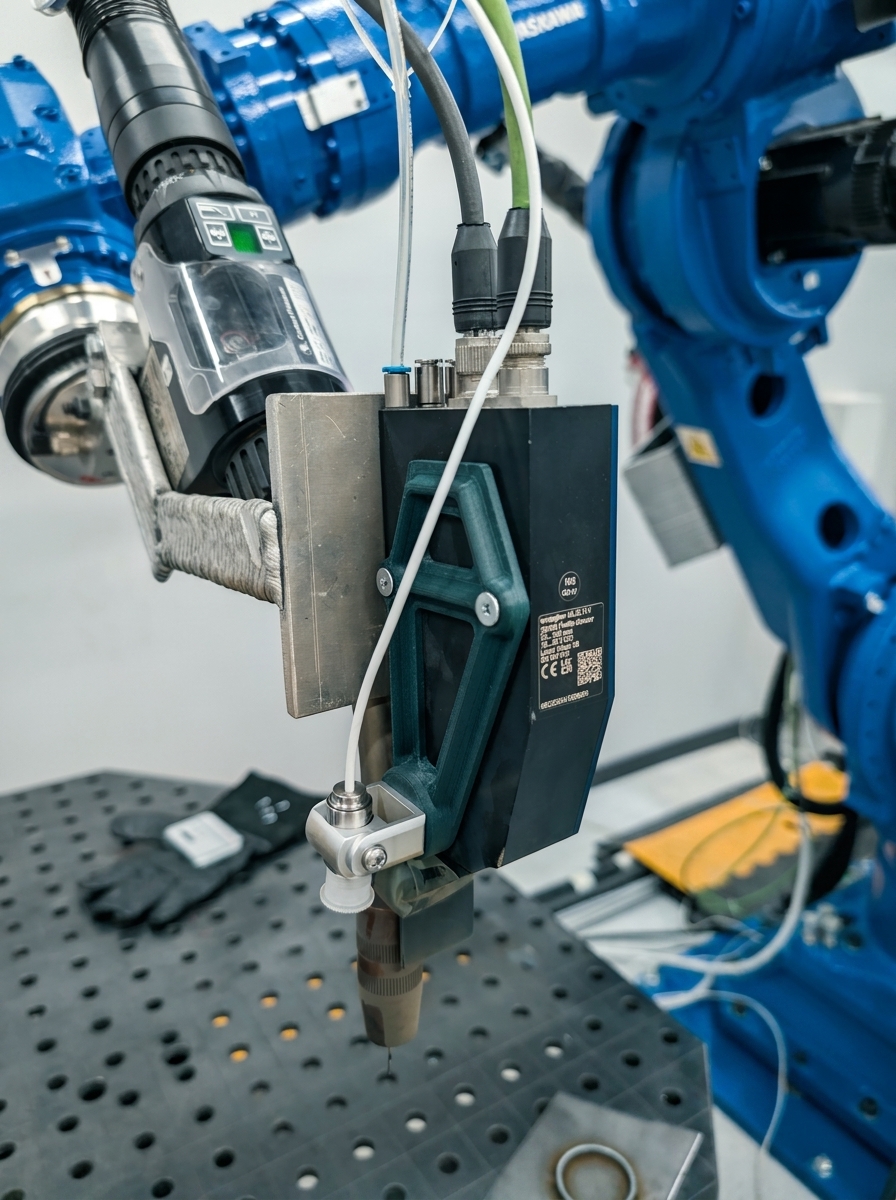
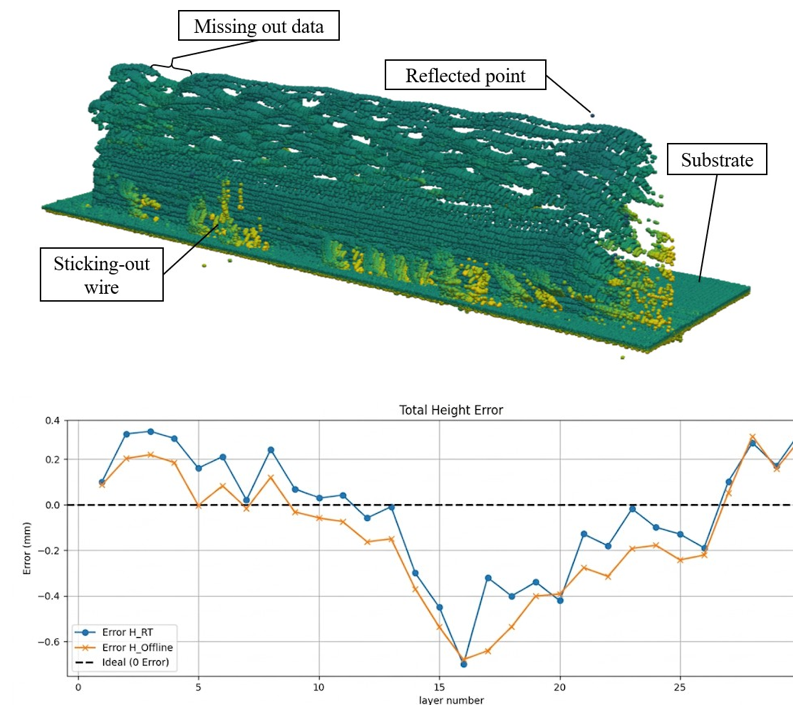
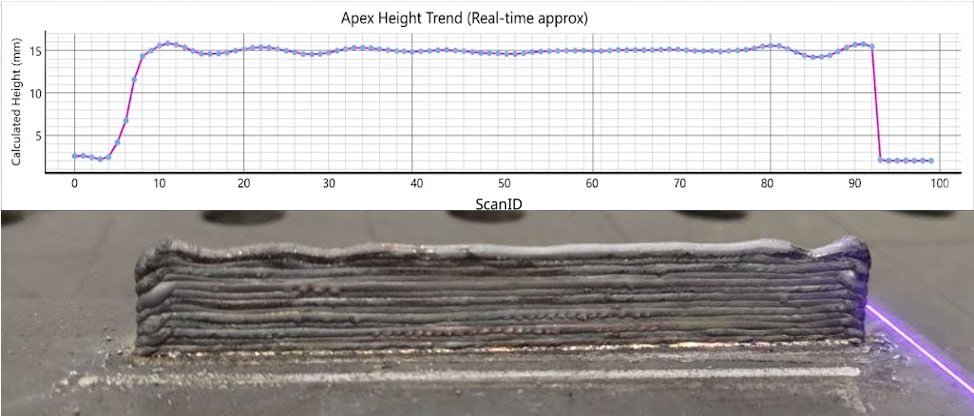
Solution: A custom software application was developed to synchronize a Yaskawa GA50 robot, Meltio laser head, and Wenglor 2D profilometer using a print-scan-print robotic routine. The mathematical pipeline processes raw point clouds through spatial filtering, parabola fitting, and apex extraction to calculate layer-specific height distributions.
Outcome: Successful generation of precise layer-specific height error graphs. Crucially, algorithmic computation is optimized to execute faster than the physical layer printing duration, enabling continuous in-situ monitoring with zero added process idle time.
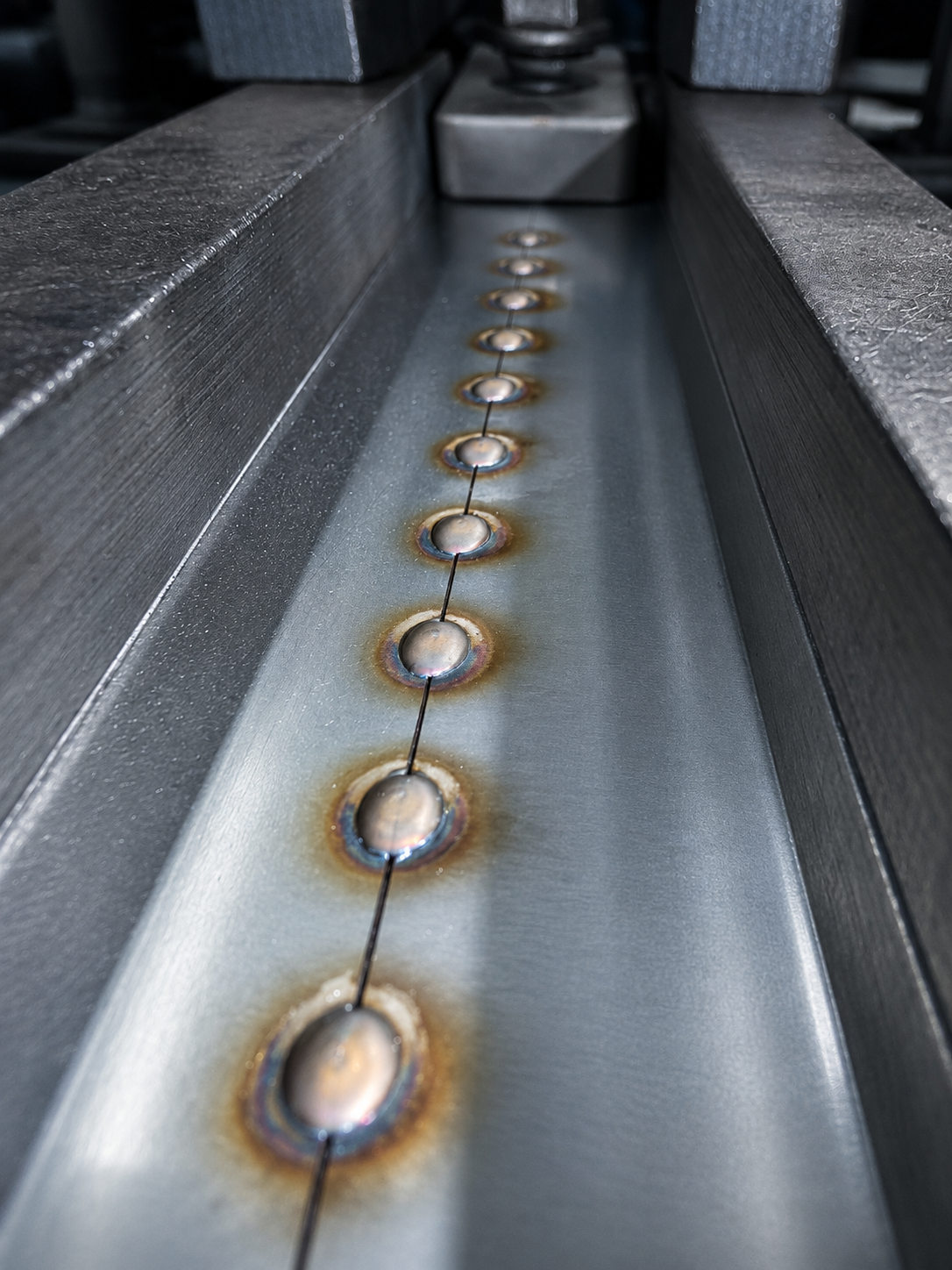
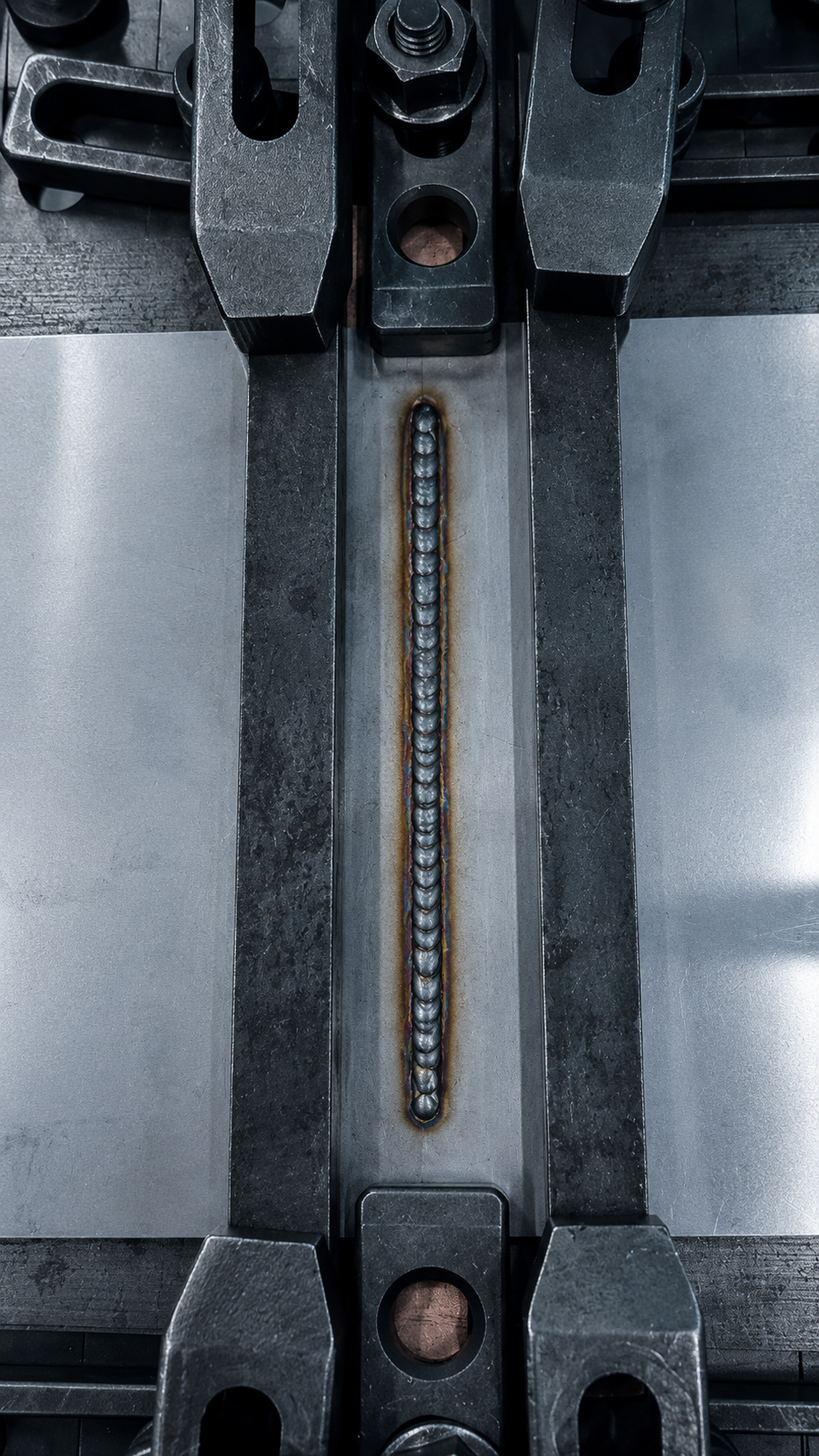
Weldability Window Determination for 0.5 mm 304L Stainless Steel
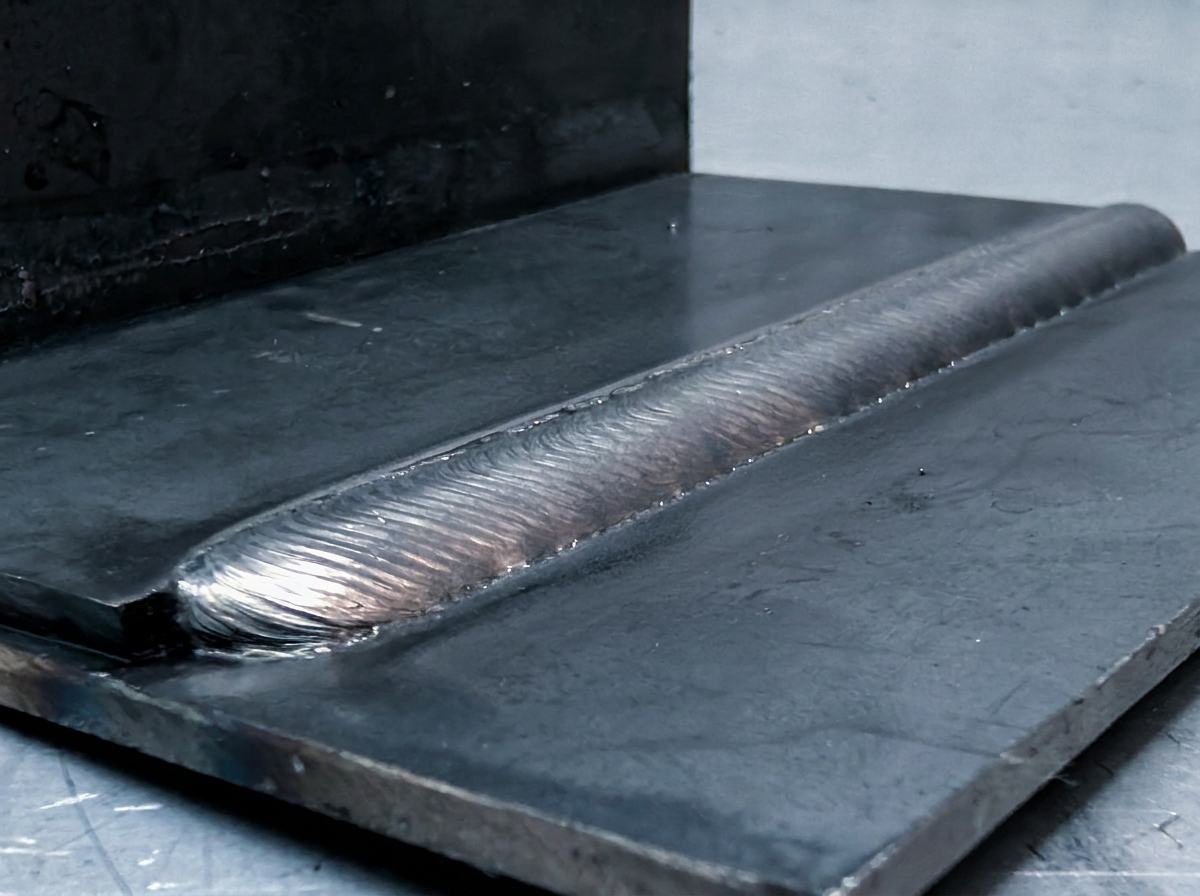
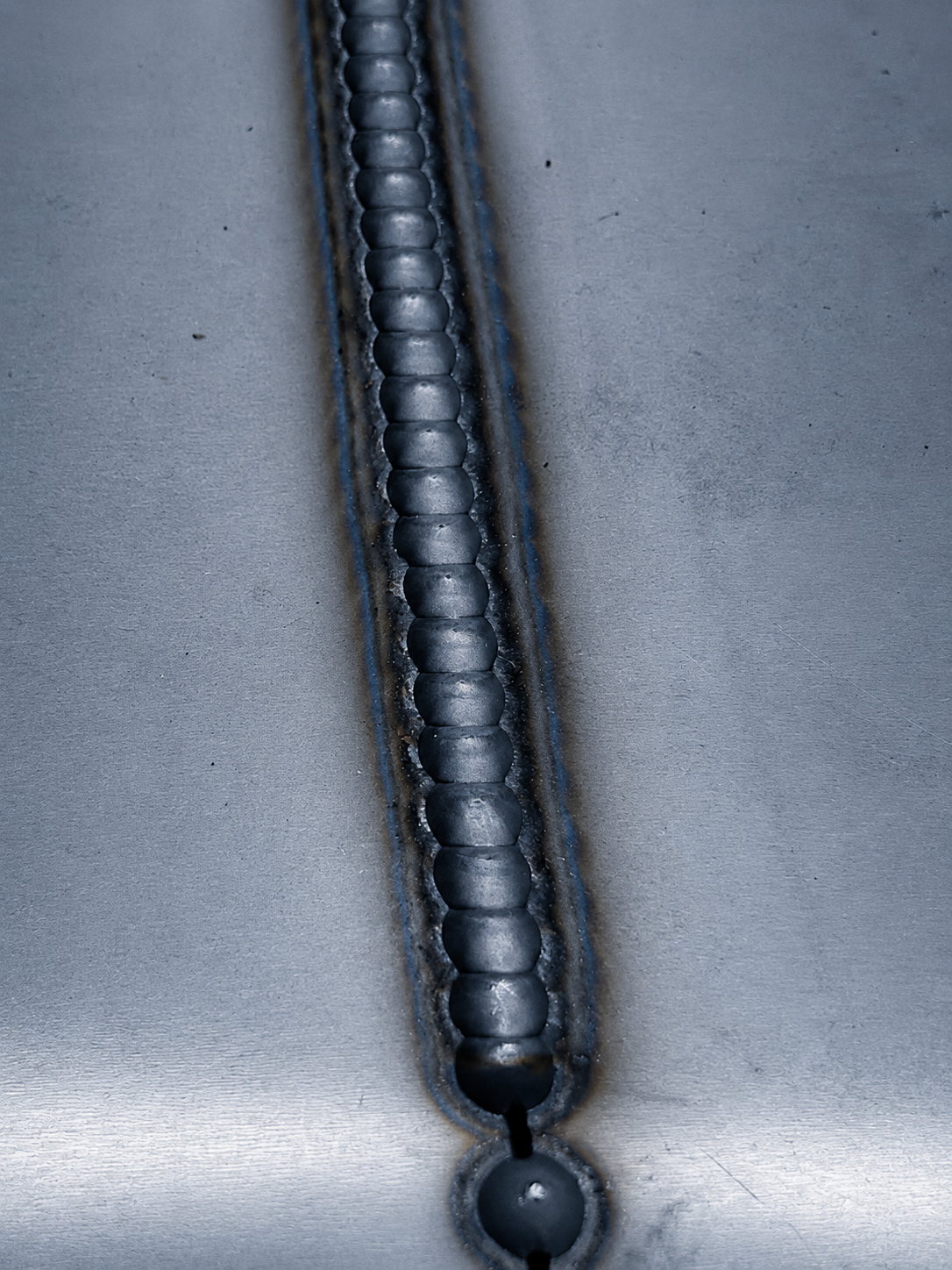
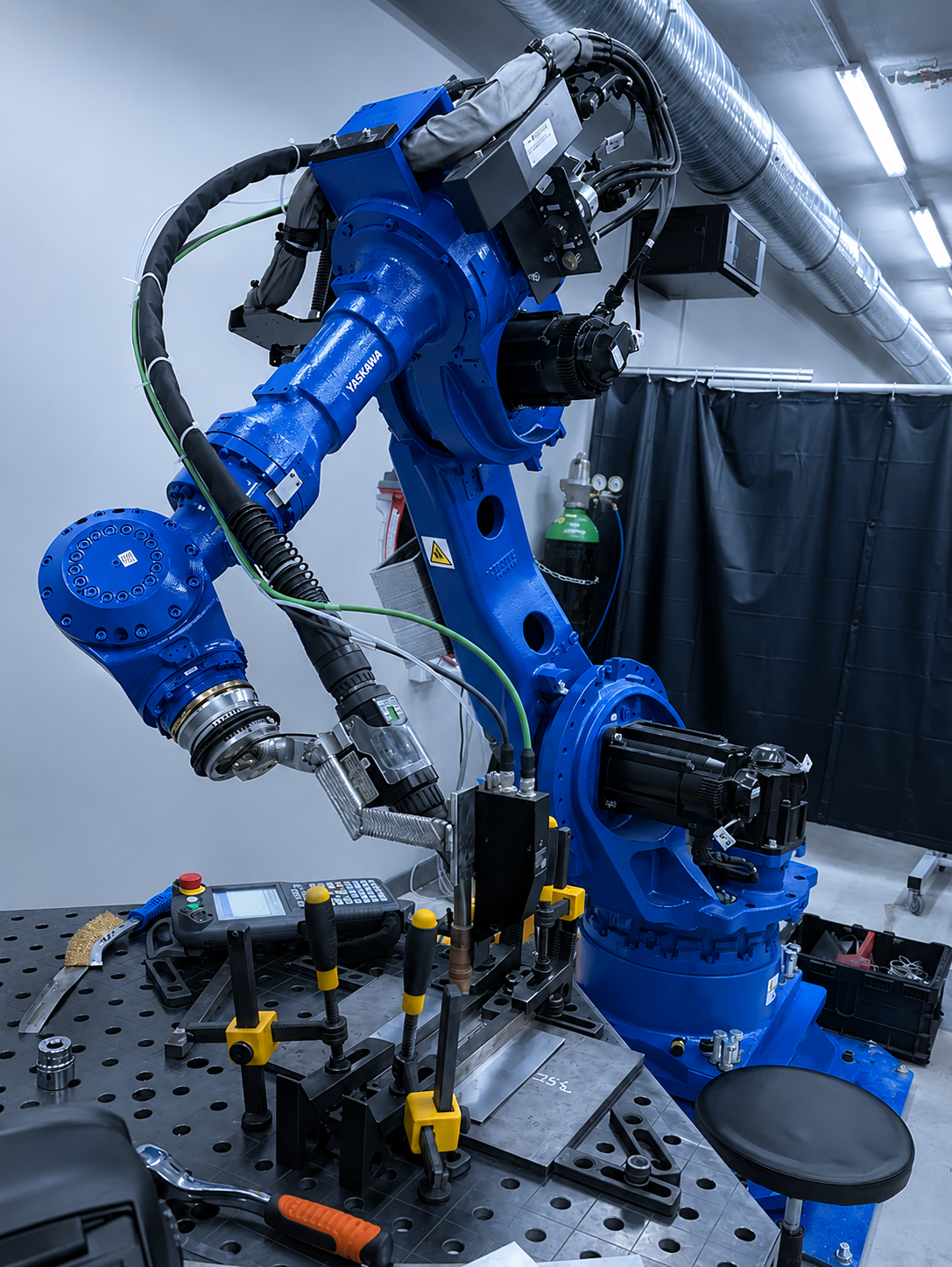
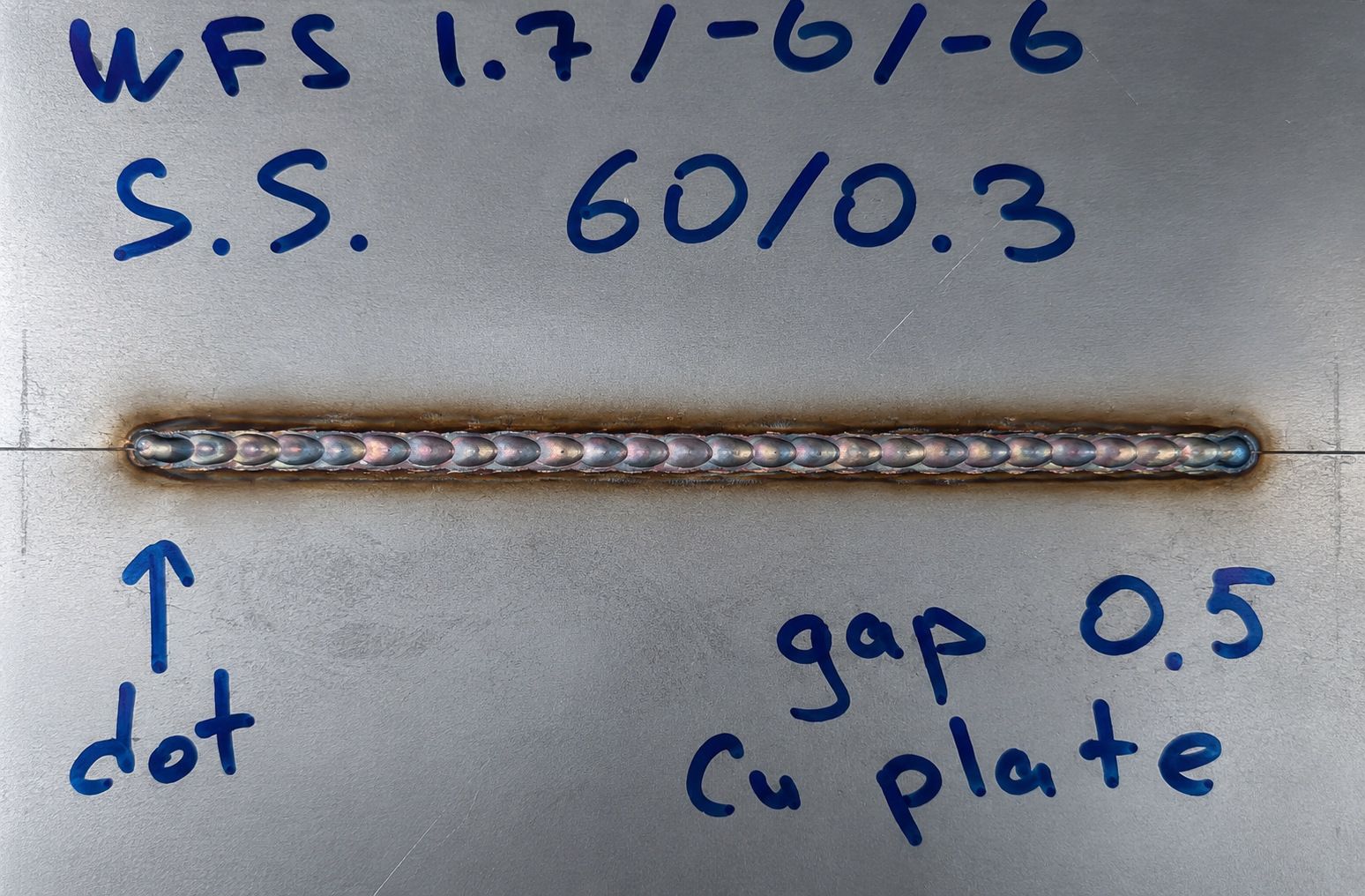
Experimental identification of the stable weldability window for 0.5 mm thick AISI 304L stainless steel butt joints using the robotic MIG-CMT process. Ultra-thin material joining is highly susceptible to severe thermal distortion and burn-through, especially under variable fit-up conditions. This project established a robust parameter set and physical thermal management strategy, ultimately achieving stable, certified joint quality for gap misalignments up to 1.0 mm.
Technical Breakdown & Project Gallery
Solution: Structured DOE (Design of Experiments) varying wire feed speed, travel speed, pulse dynamics, and backing bar copper geometry. Process data captured using high-speed imaging and synchronized thermal logging.
Outcome: Certified parameter window ensuring zero burn-through and optimum tensile strength. Results published in *Results in Engineering (2026)*.
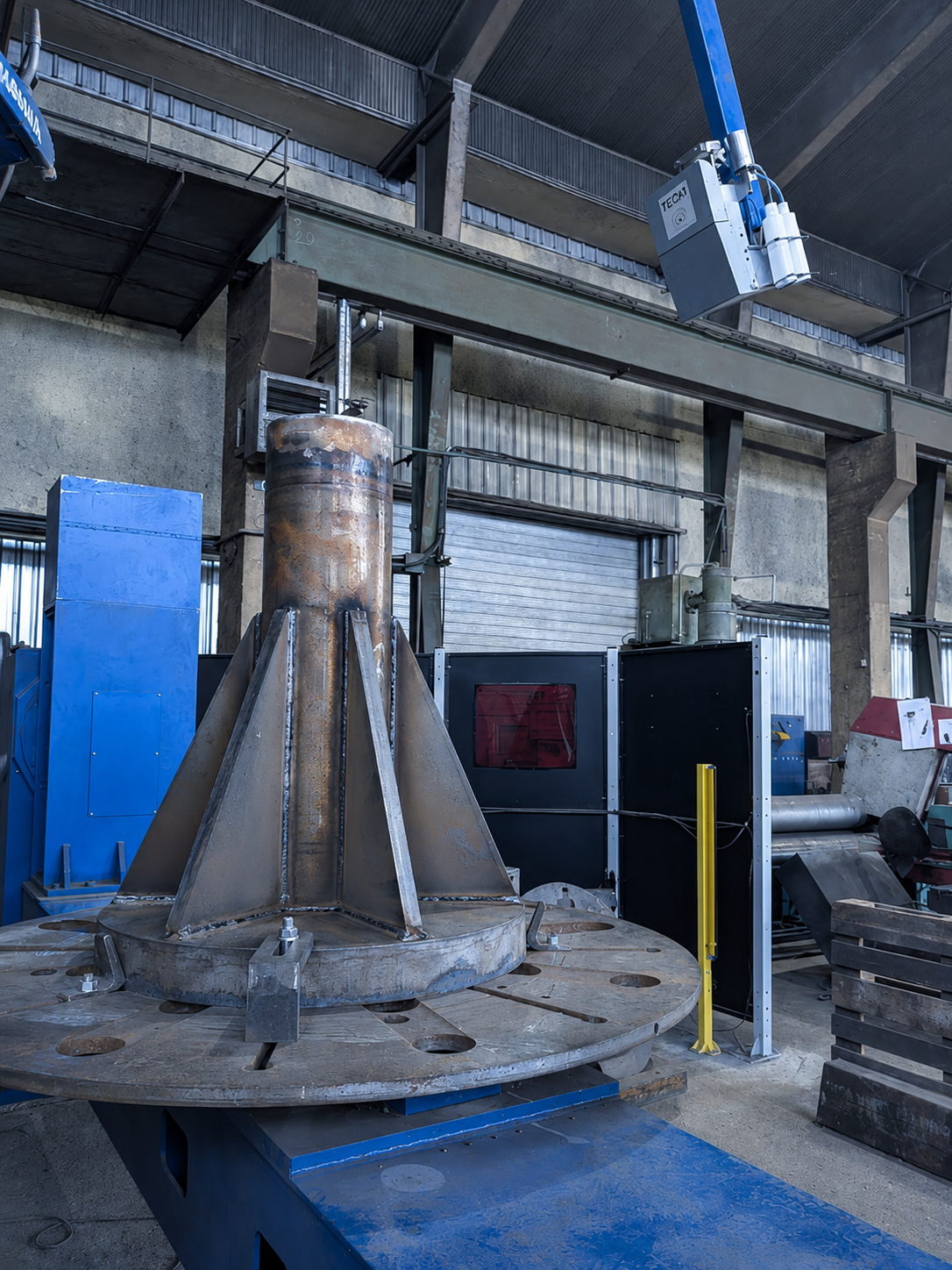
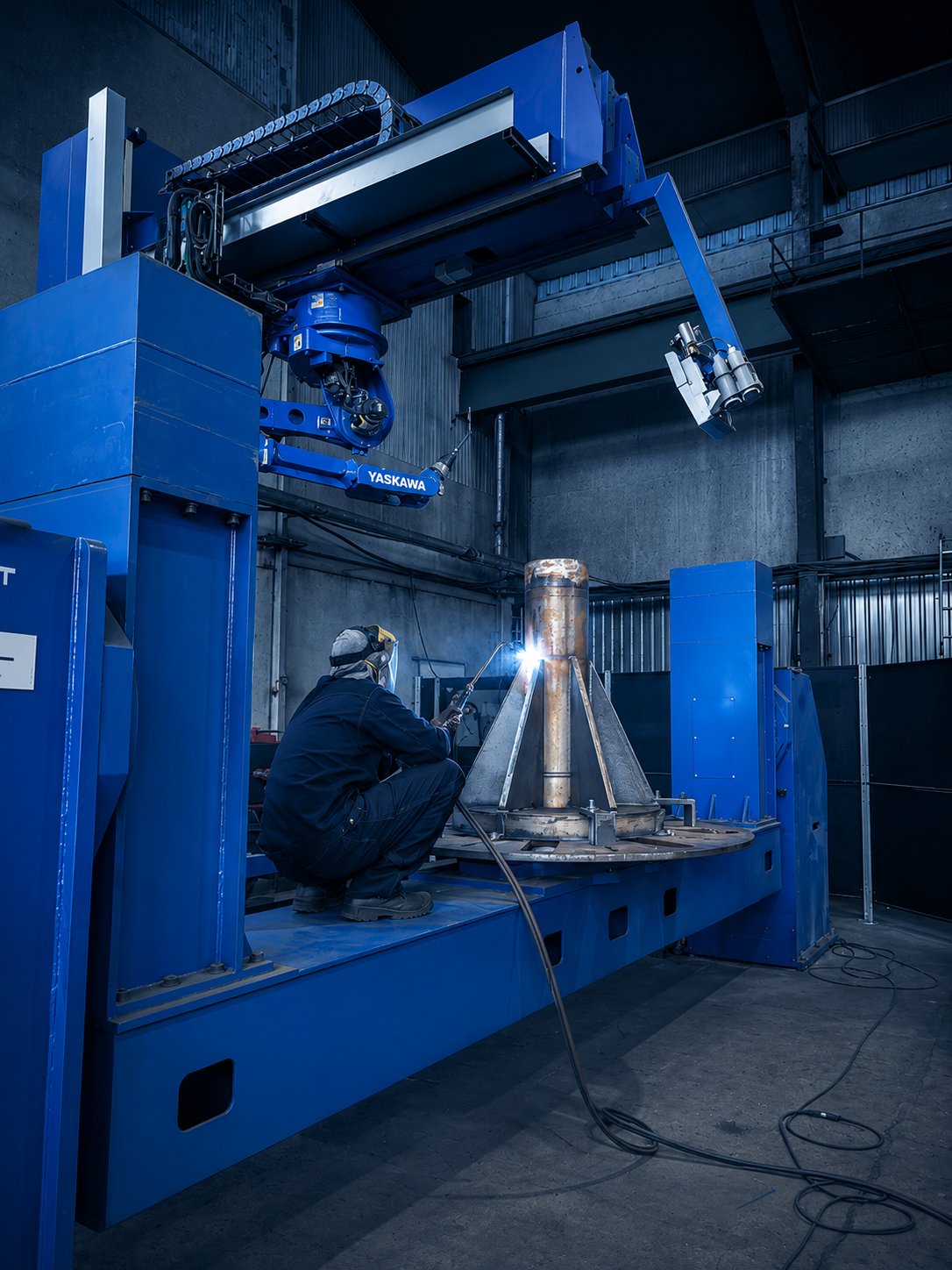
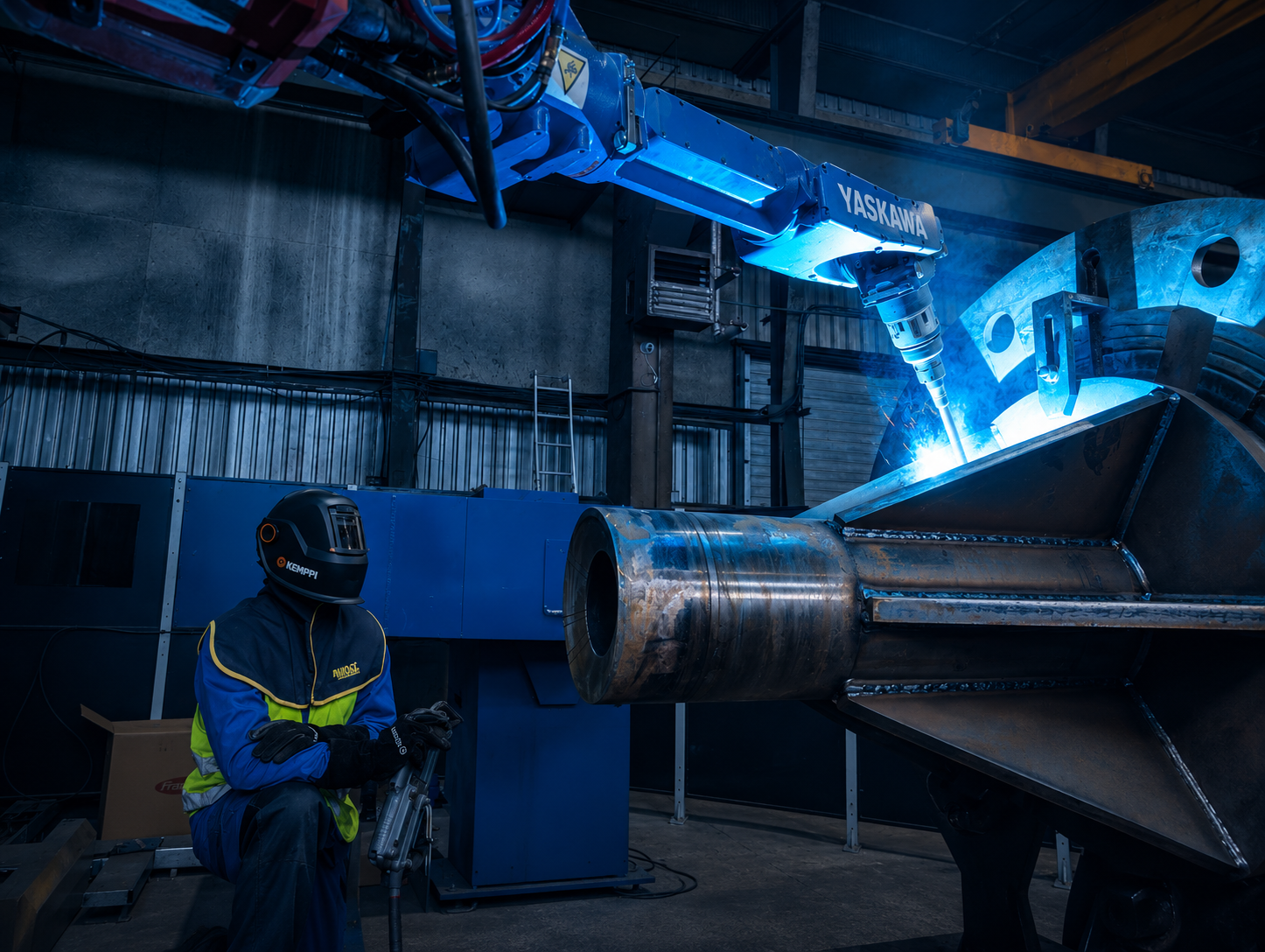
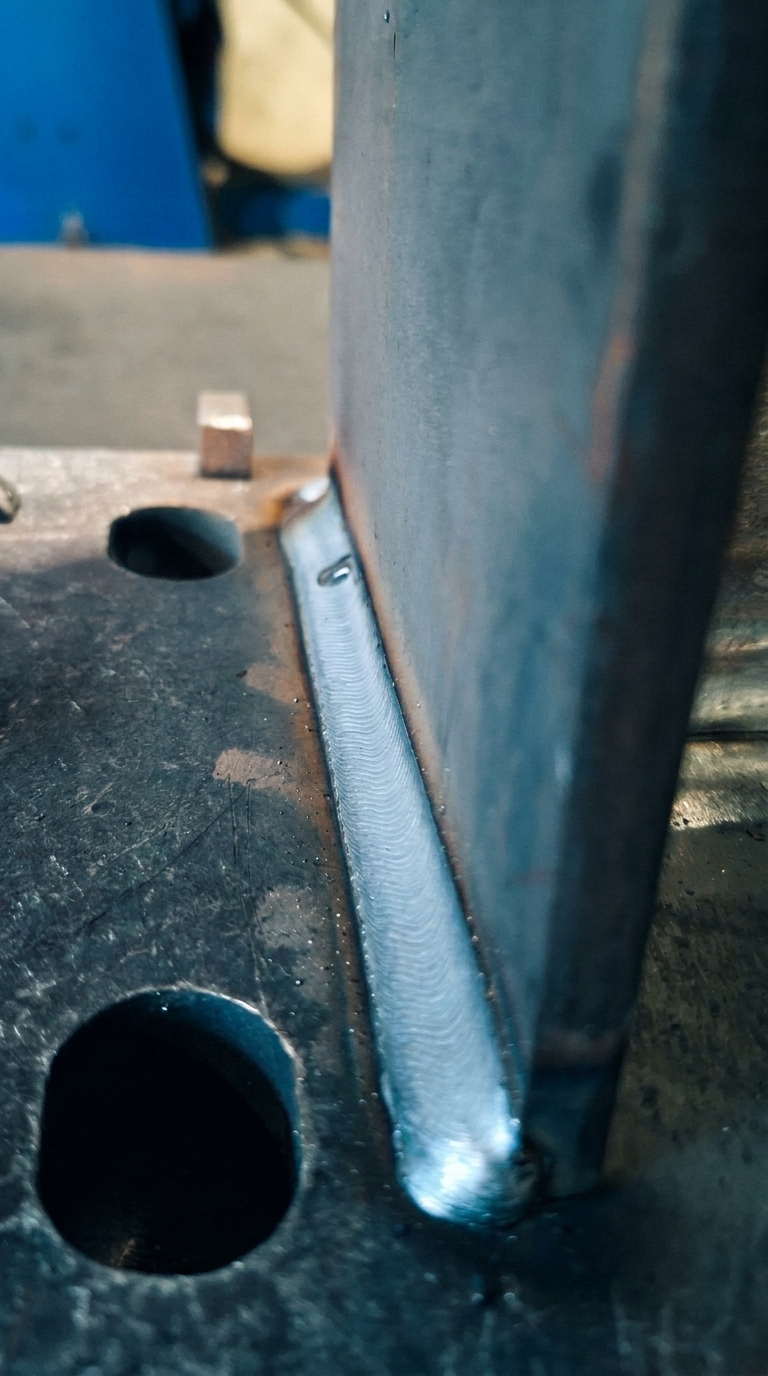
Robotic welding integration for heavy construction parts
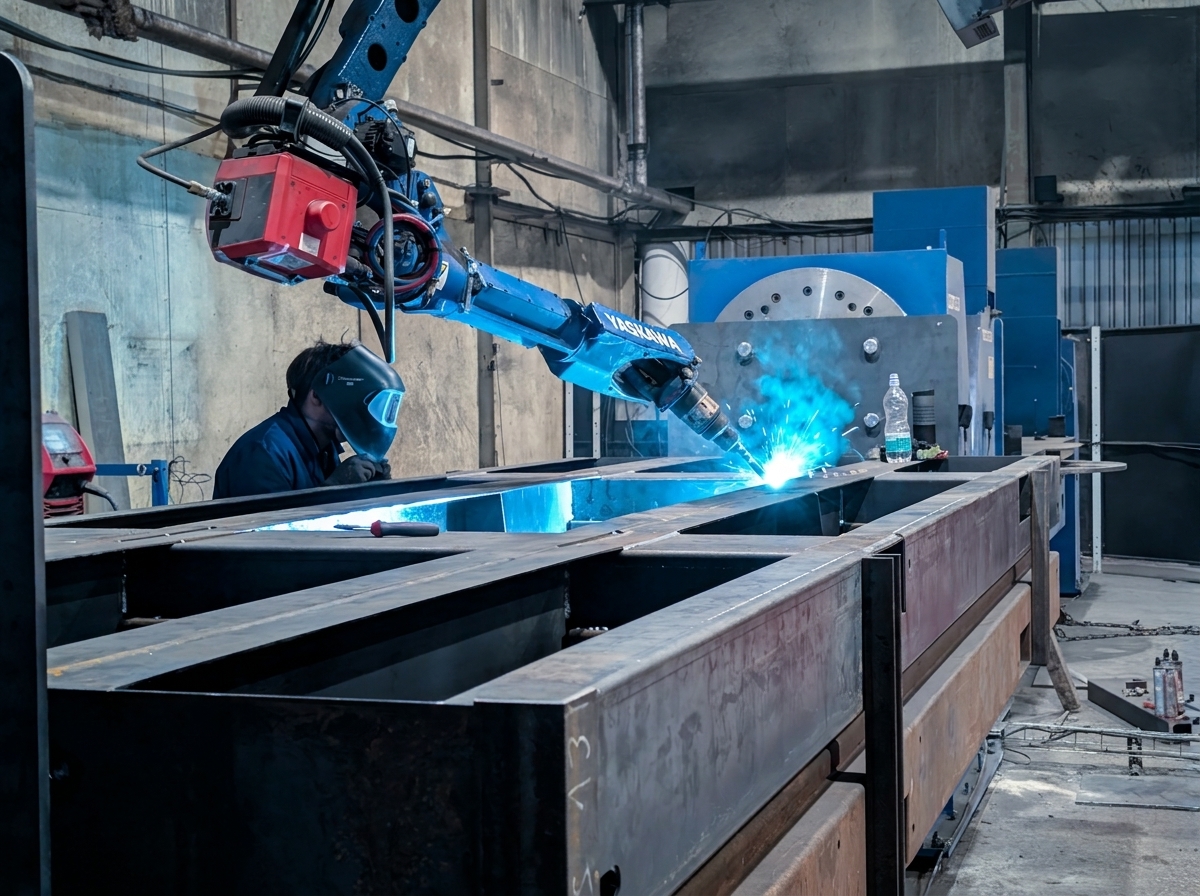
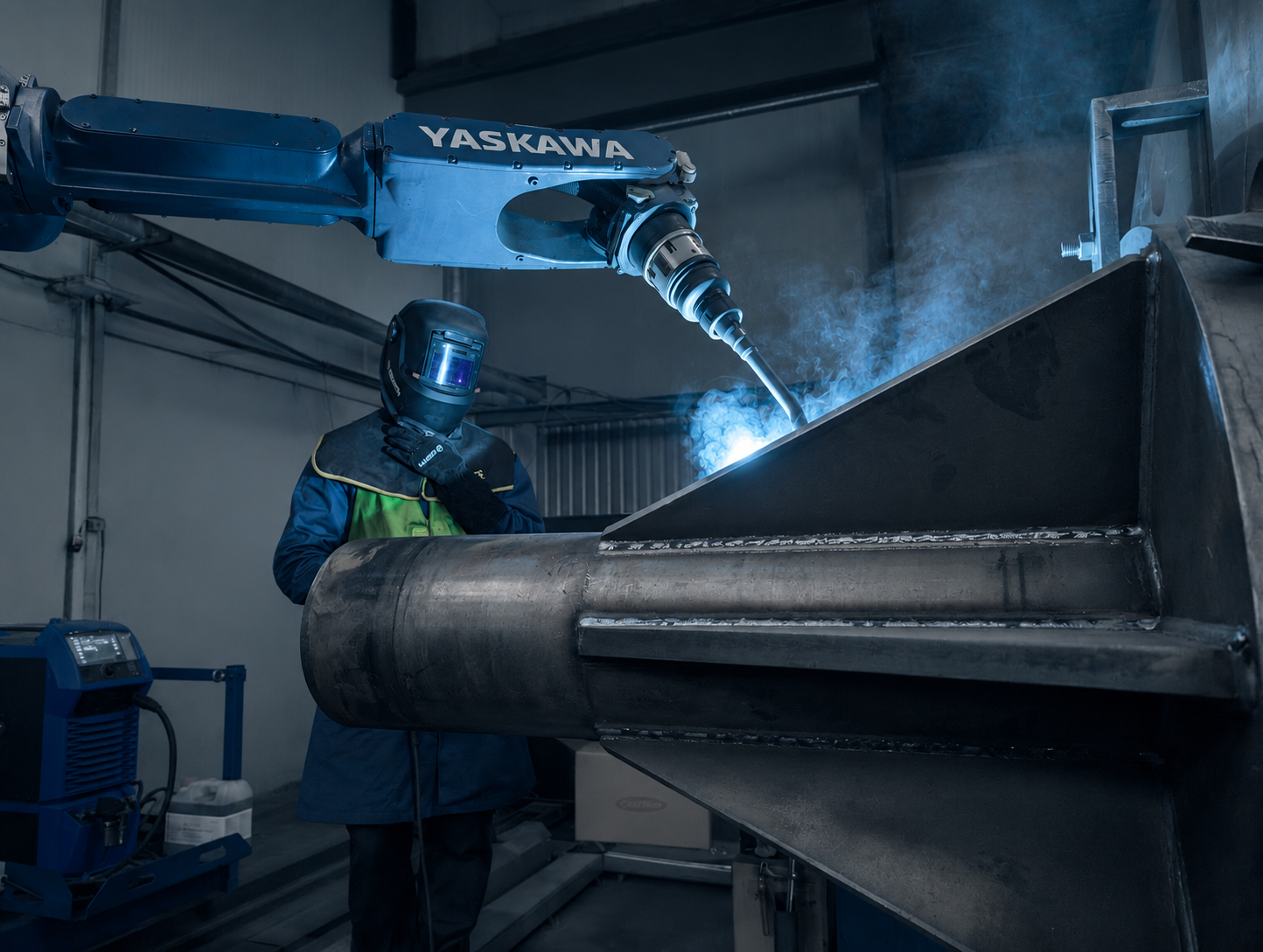
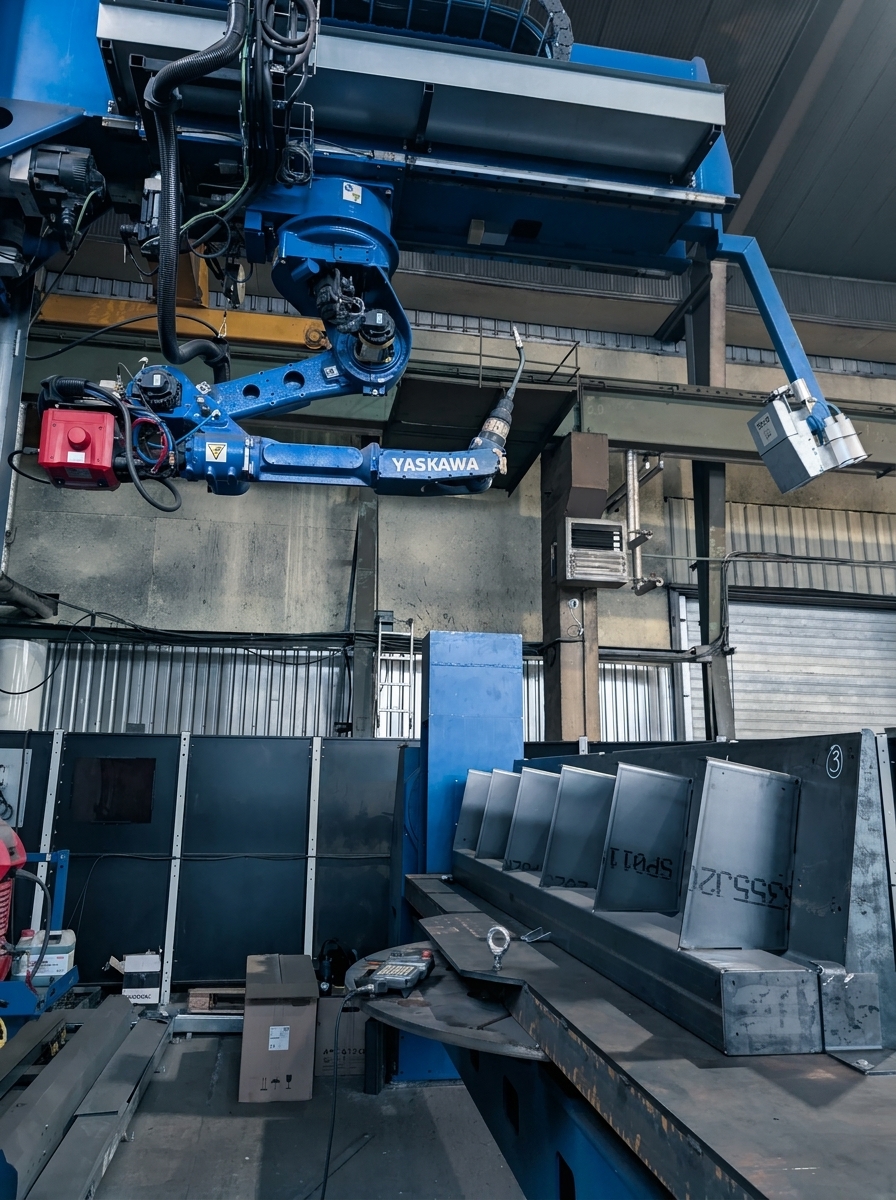
Development and deployment of automated welding processes for massive structural components utilizing a multi-axis gantry complex (18m linear track, dual positioners). Large-scale construction frames frequently suffer from unpredictable pre-weld gaps and dimensional deviations due to manual pre-assembly. By integrating dynamic sensing logic, the robotic system actively adapts its toolpaths to these physical variations, successfully commissioning automated production for multiple distinct heavy components.
Technical Breakdown & Project Gallery
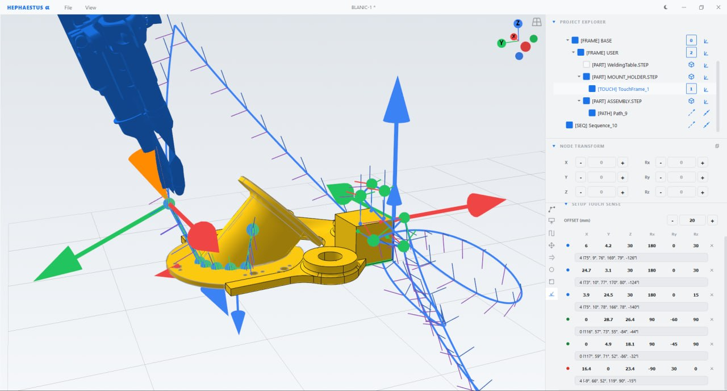
Solution: Implementation of touch-sensing and arc-sensing search routines to detect joint origins, seam paths, and gap fluctuations prior to deposition. Welding programs autonomously calculate fill volume and parameter adjustments.
Outcome: Successful setup of 5+ different parts for robotic welding. Reduced production cycle times by up to 60% while eliminating weld defects caused by thermal distortion and manual joint preparation inconsistencies.
Real-Time Data Analytics and Online Control Software Suite for WAAM
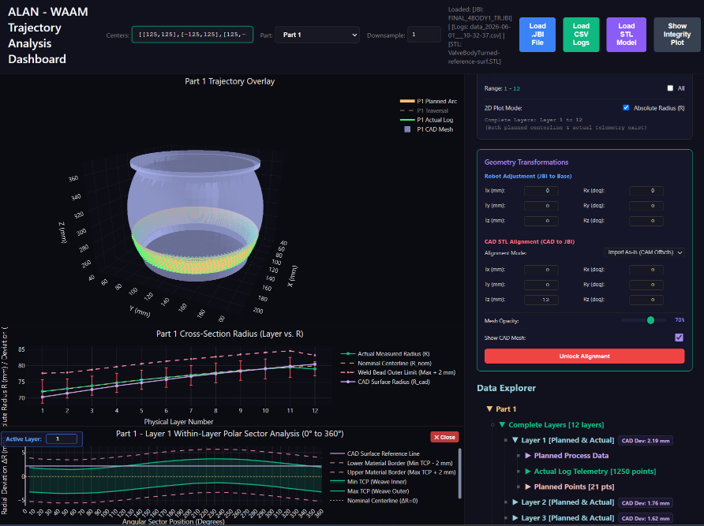
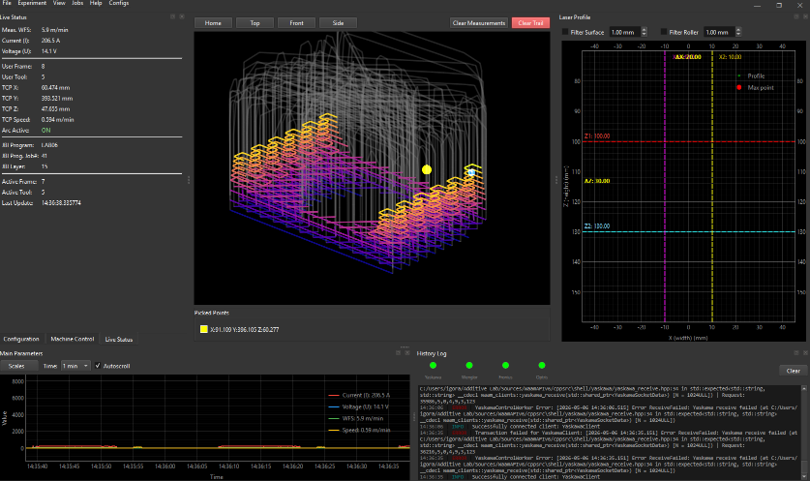
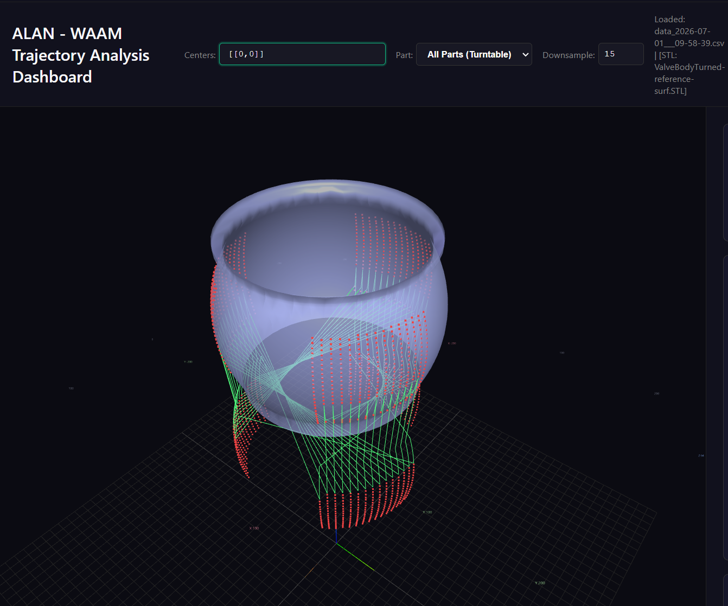
Internal R&D focused on developing a comprehensive software architecture for data acquisition, multi-dimensional rendering, and active process control in wire additive manufacturing. Managing complex deposition requires real-time synchronization of disparate, asynchronous hardware feeds. This project established a centralized, PC-based software suite to consolidate these signals, enabling deep digital traceability and dynamic parameter intervention.
Technical Breakdown & Project Gallery
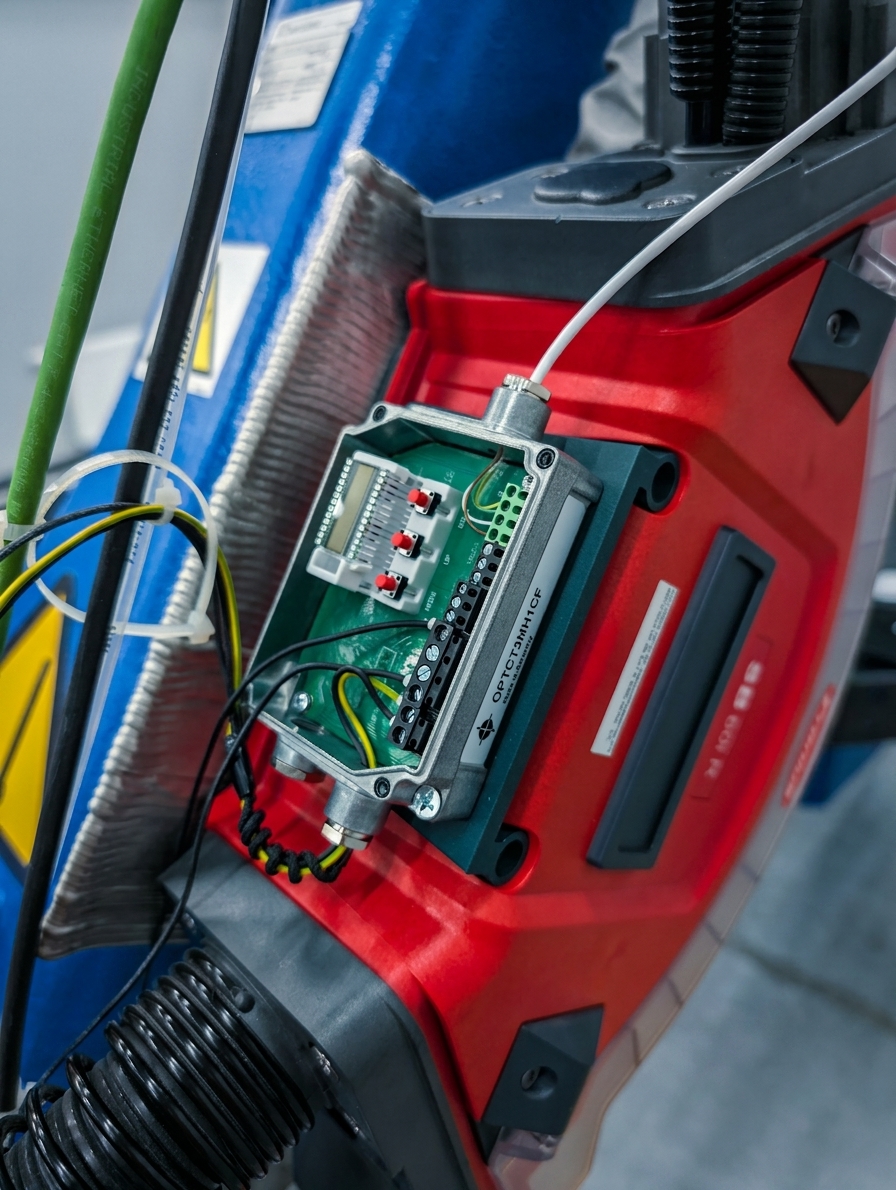
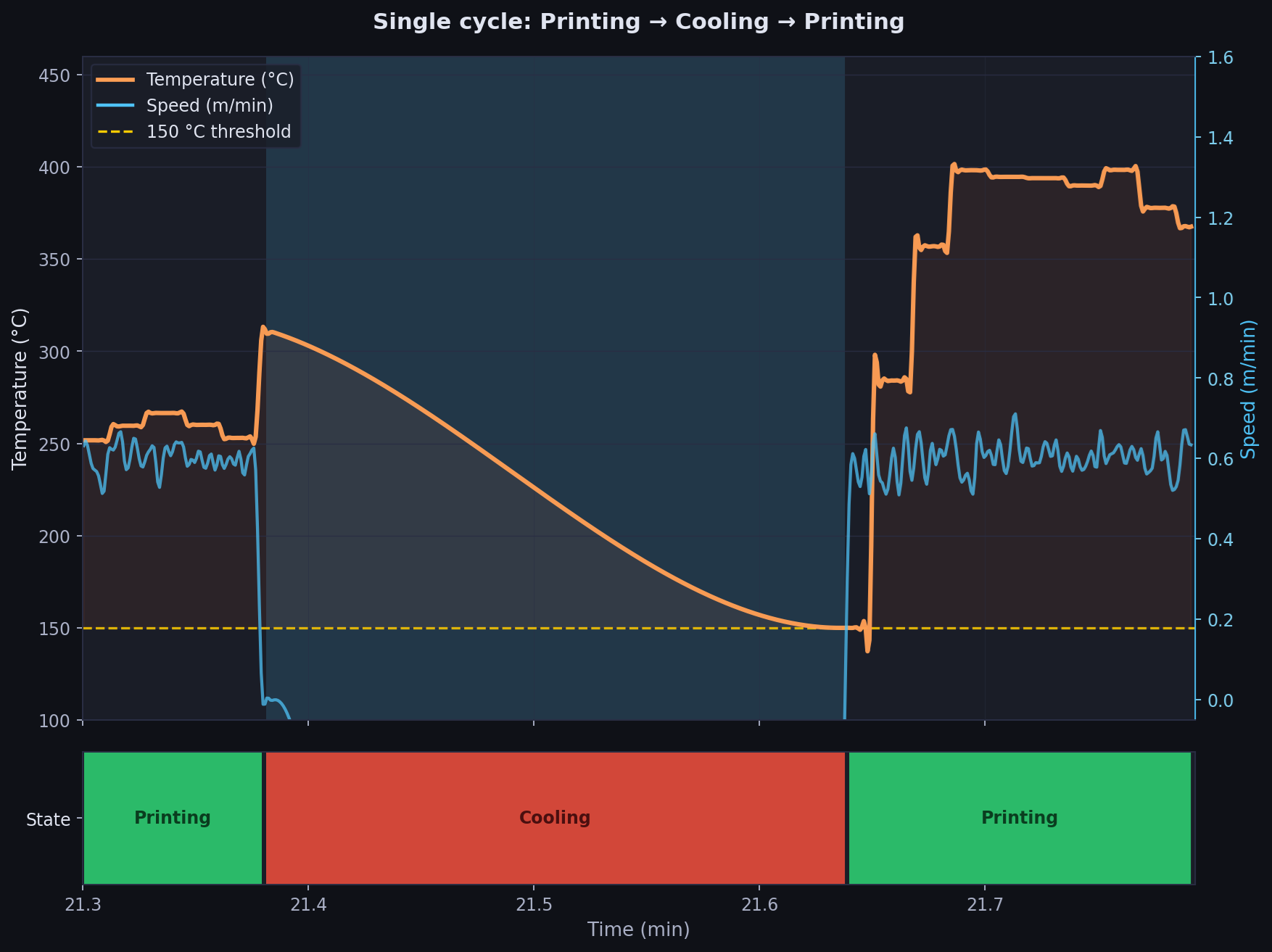
Solution: A custom architecture was developed to synchronize inputs from the robotic controller, welding power source, 2D profilometer, and thermal sensors. The centralized PC application features multi-spatial rendering (2D parameter graphs, 3D TCP/point clouds, textual job execution logs) and local storage protocols. Integrated control logic allows operators to actively adjust travel speeds, energy inputs, trajectories, and thermal limits on the fly.
Outcome: A fully integrated data environment providing precise spatial tracking, total post-process digital traceability, and robust online process modulation.
Technical Media Archive
About our laboratory
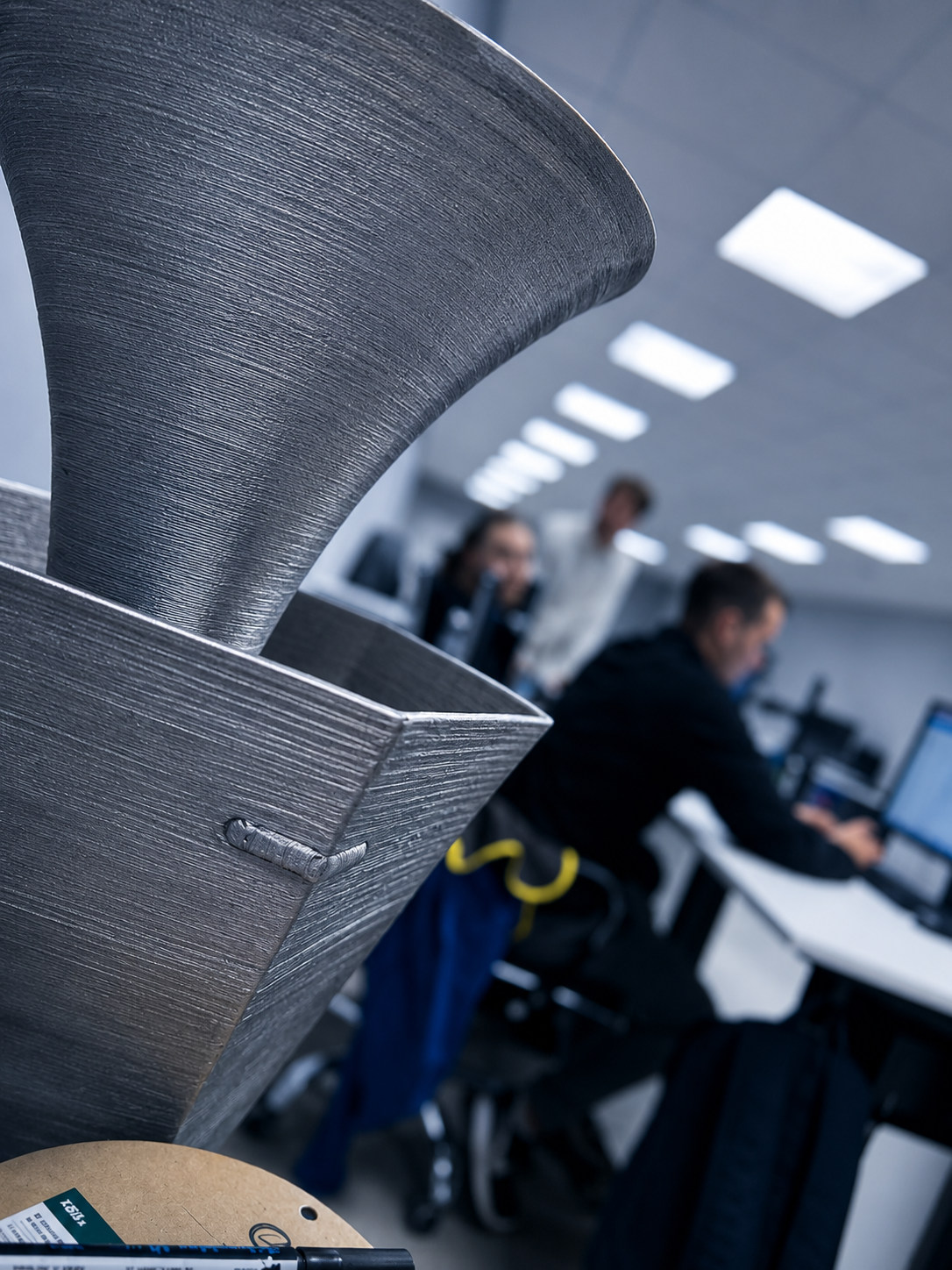
domain AdditiveLab is a dedicated research and development (R&D) unit within TSI. Equipped with industrial-grade hardware, our facility supports both fundamental process research and direct commercial manufacturing projects.
school While our primary focus is applied industrial R&D, we are also actively engaged in the scientific and educational communities. Our work includes publishing scientific articles, participating in state-funded research projects, and presenting at industrial exhibitions. To support the next generation of engineers, we also deliver an Industrial Robotics course to TSI students and offer a competitive internship program.
Our laboratory is equipped with a number of state-of-the-art systems for development, manufacturing, prototyping, and analysis:
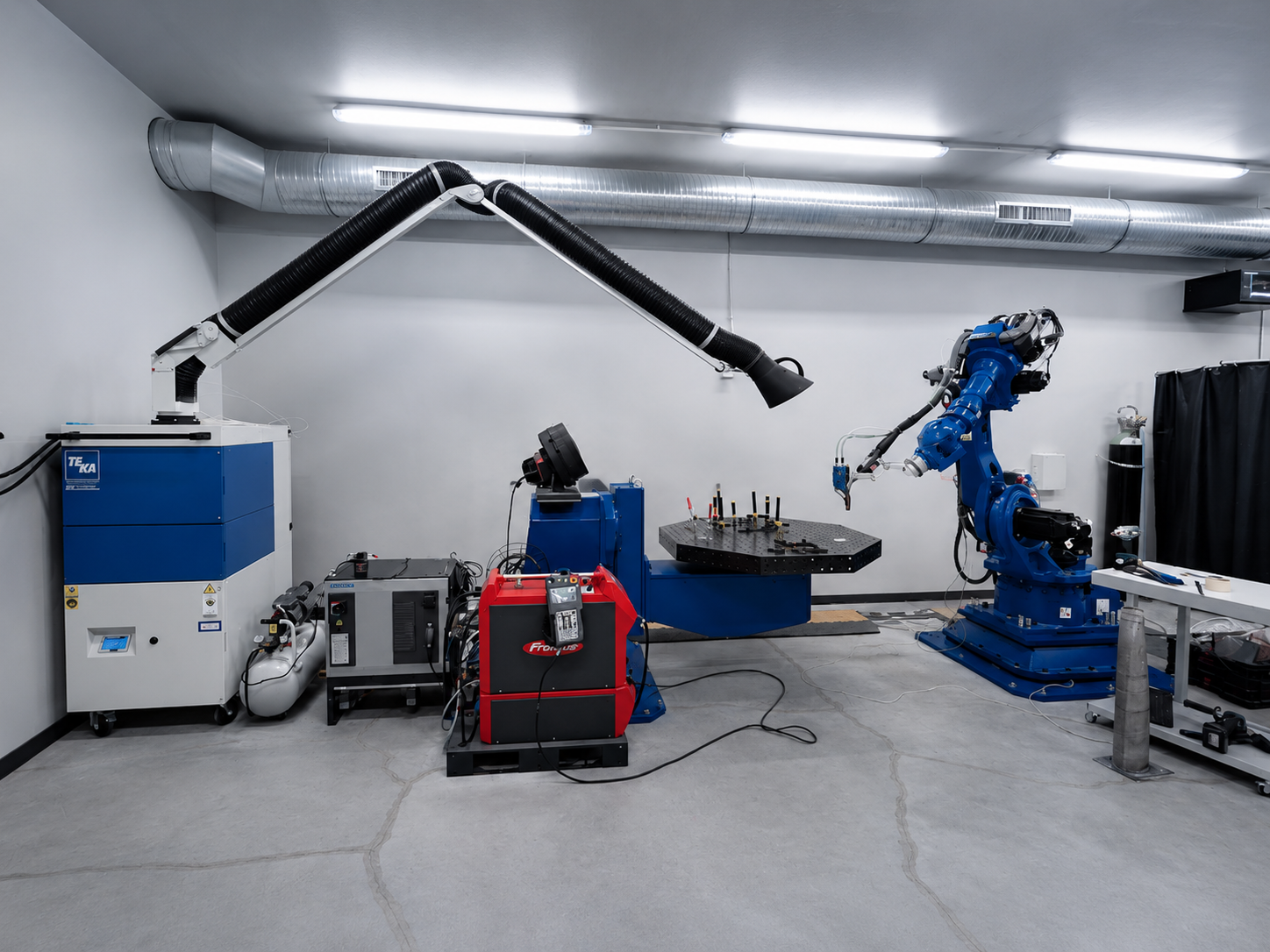
Robotic Arc Deposition & Welding Cell
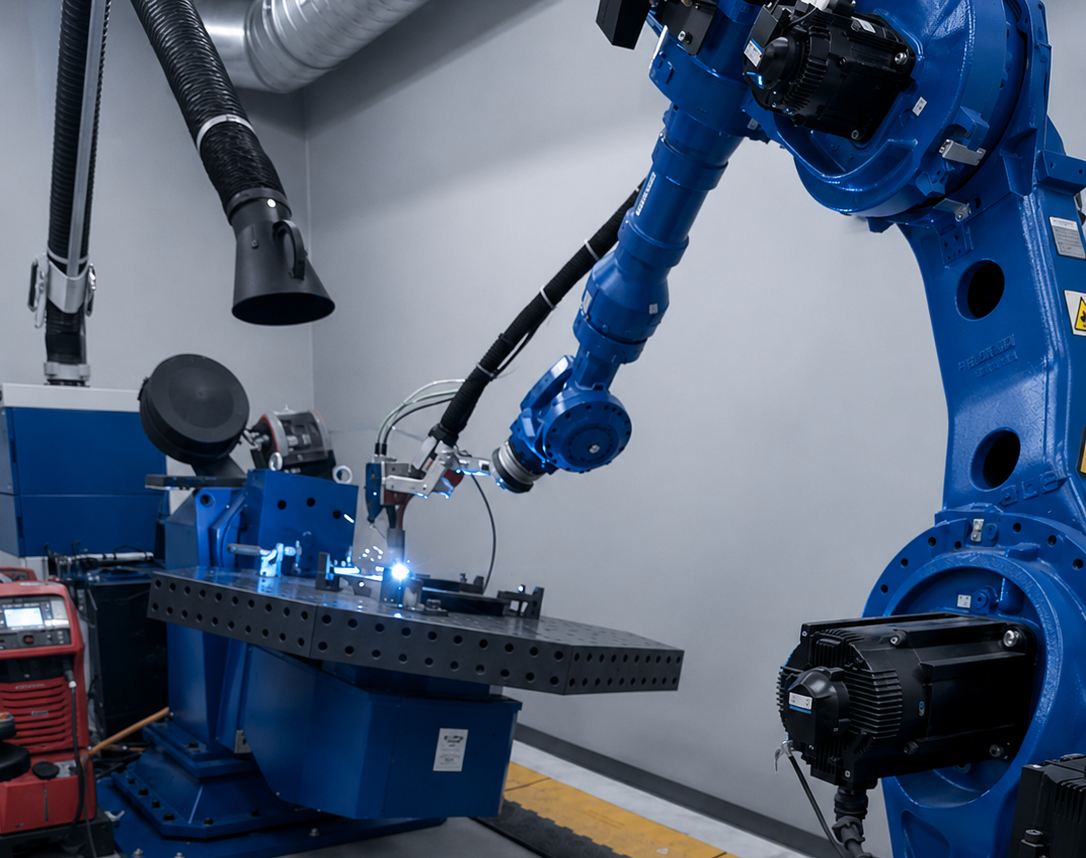
Multi-axis kinematic workspace utilizing heavy-duty positioners and advanced sensor integration. Hardware includes a Yaskawa HA industrial robot, 2-axis rotary positioner, Fronius CMT power source, Wenglor 2D profile sensor, and an infrared temperature pyrometer. Applications: MIG/MAG Welding and Wire Arc Additive Manufacturing (WAAM).
Our Team
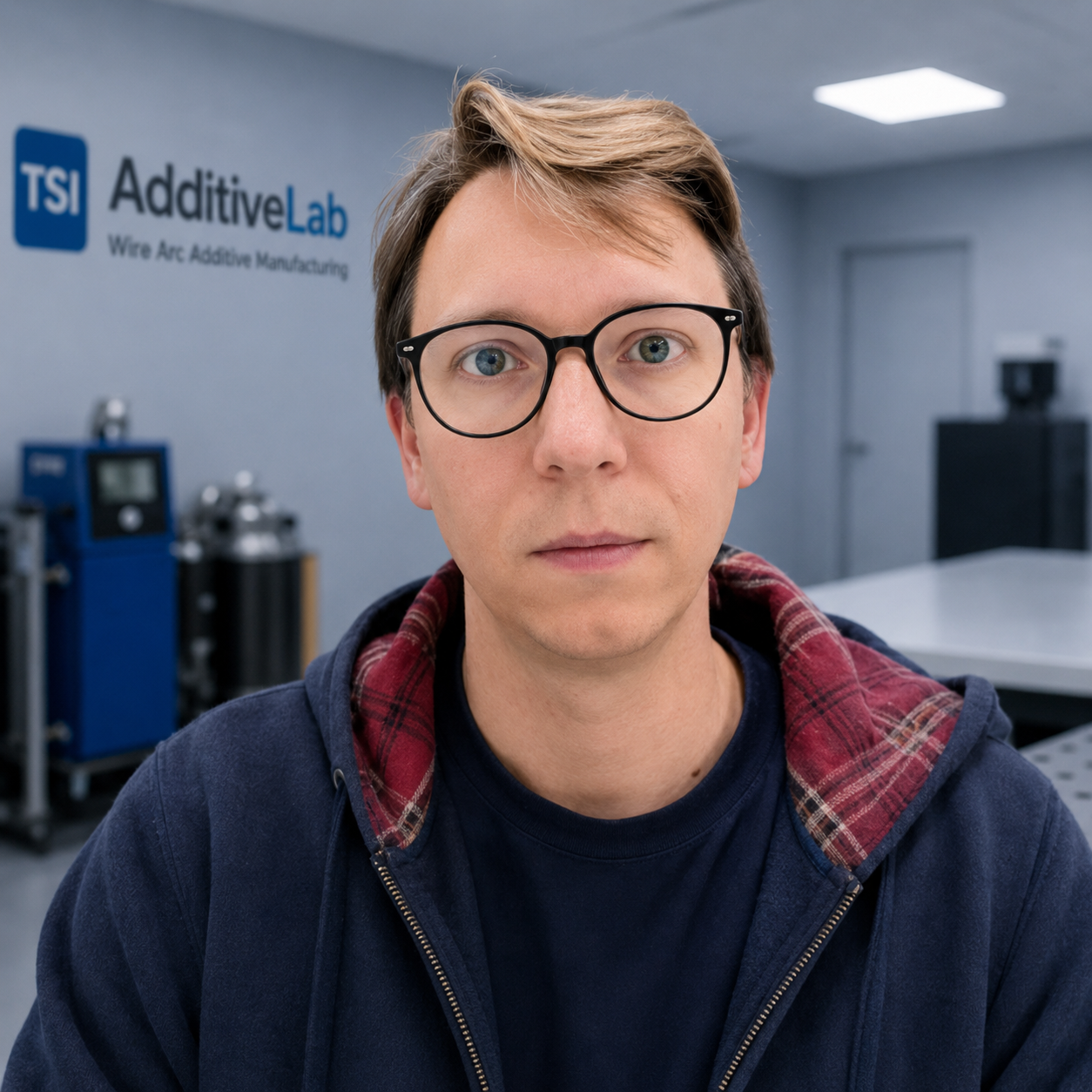
Arsenii Kisarev
Head of the lab
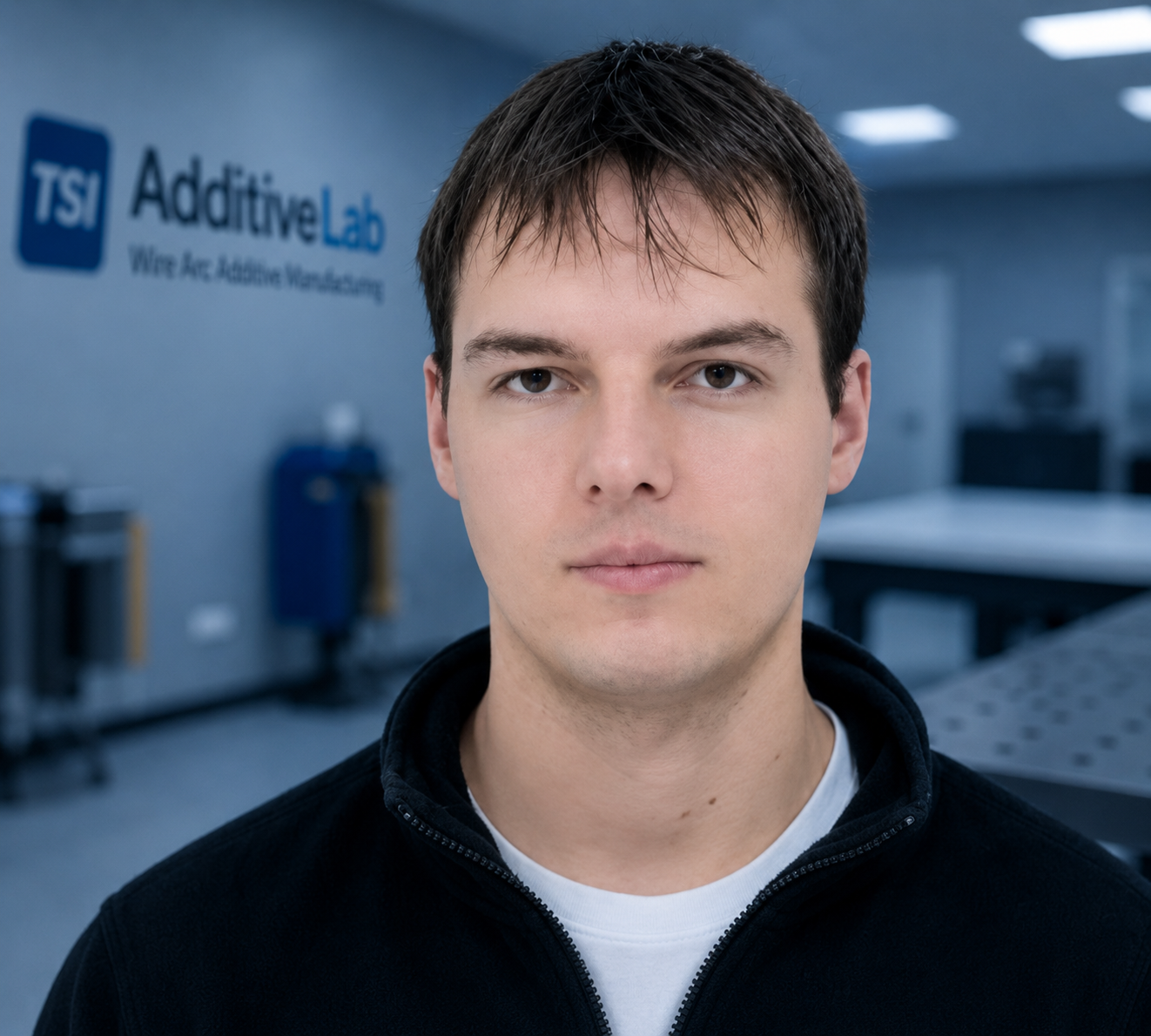
Vasilijs Vilks
R&D Engineer
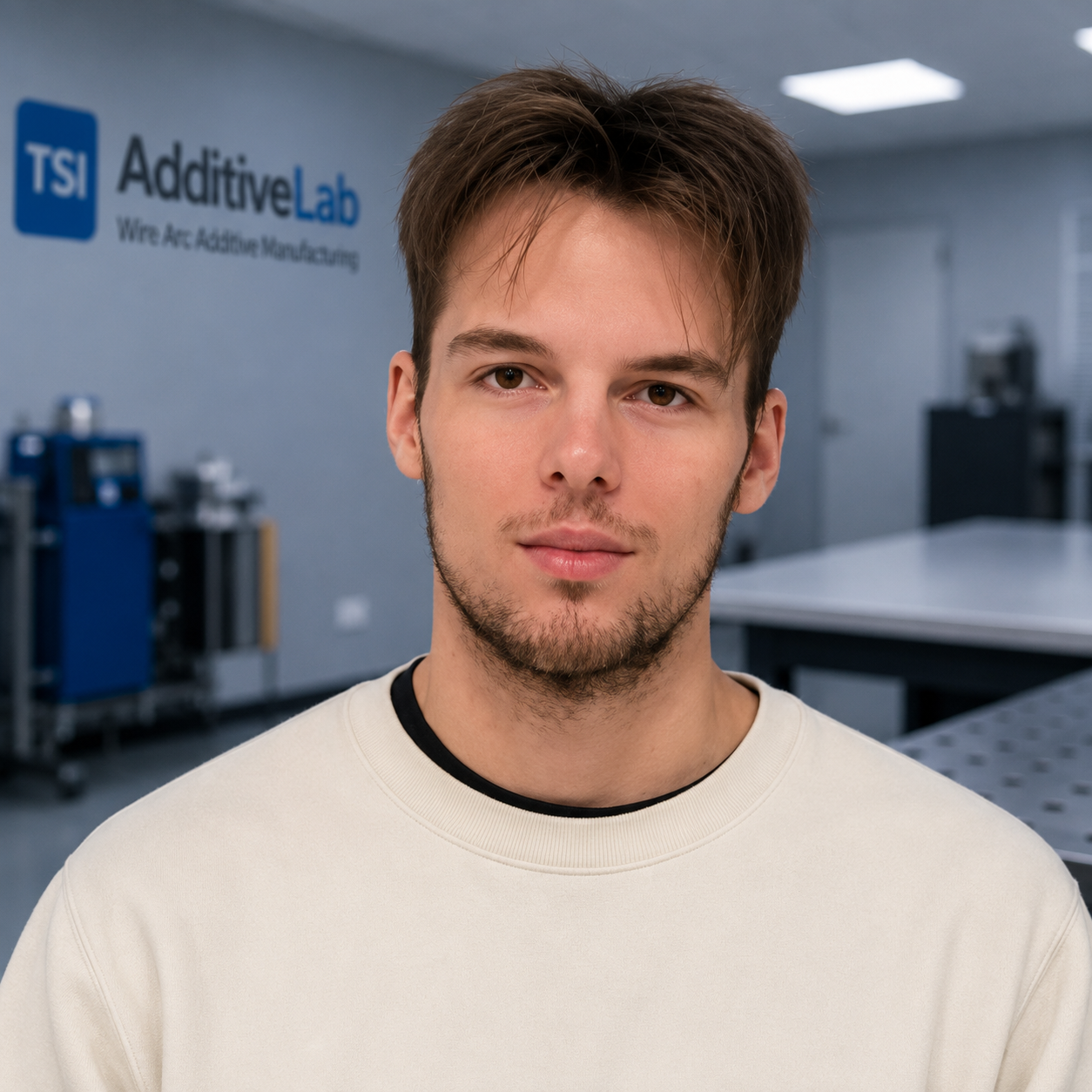
Manu Vilks
R&D Engineer
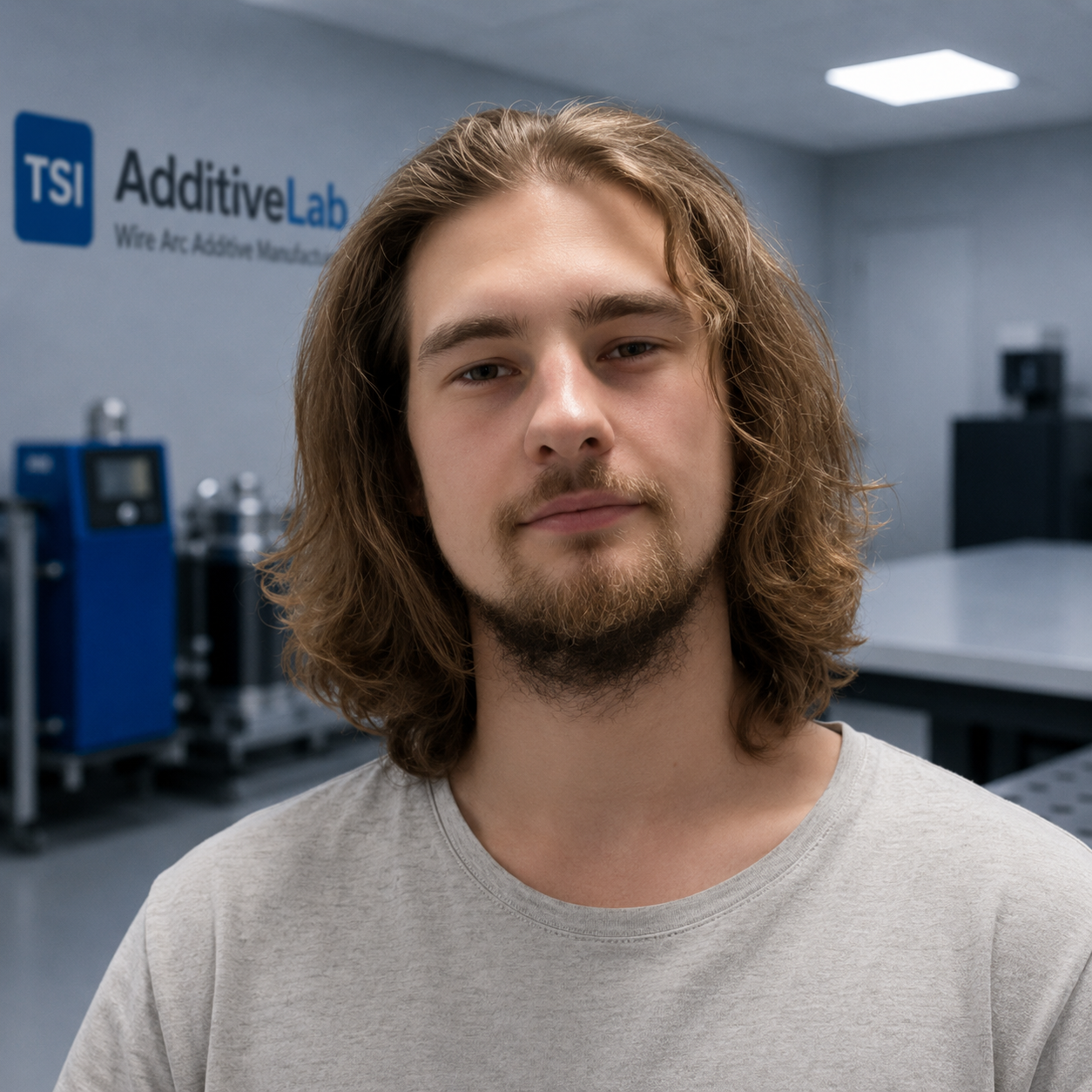
Timofejs Onišuks
R&D Engineer
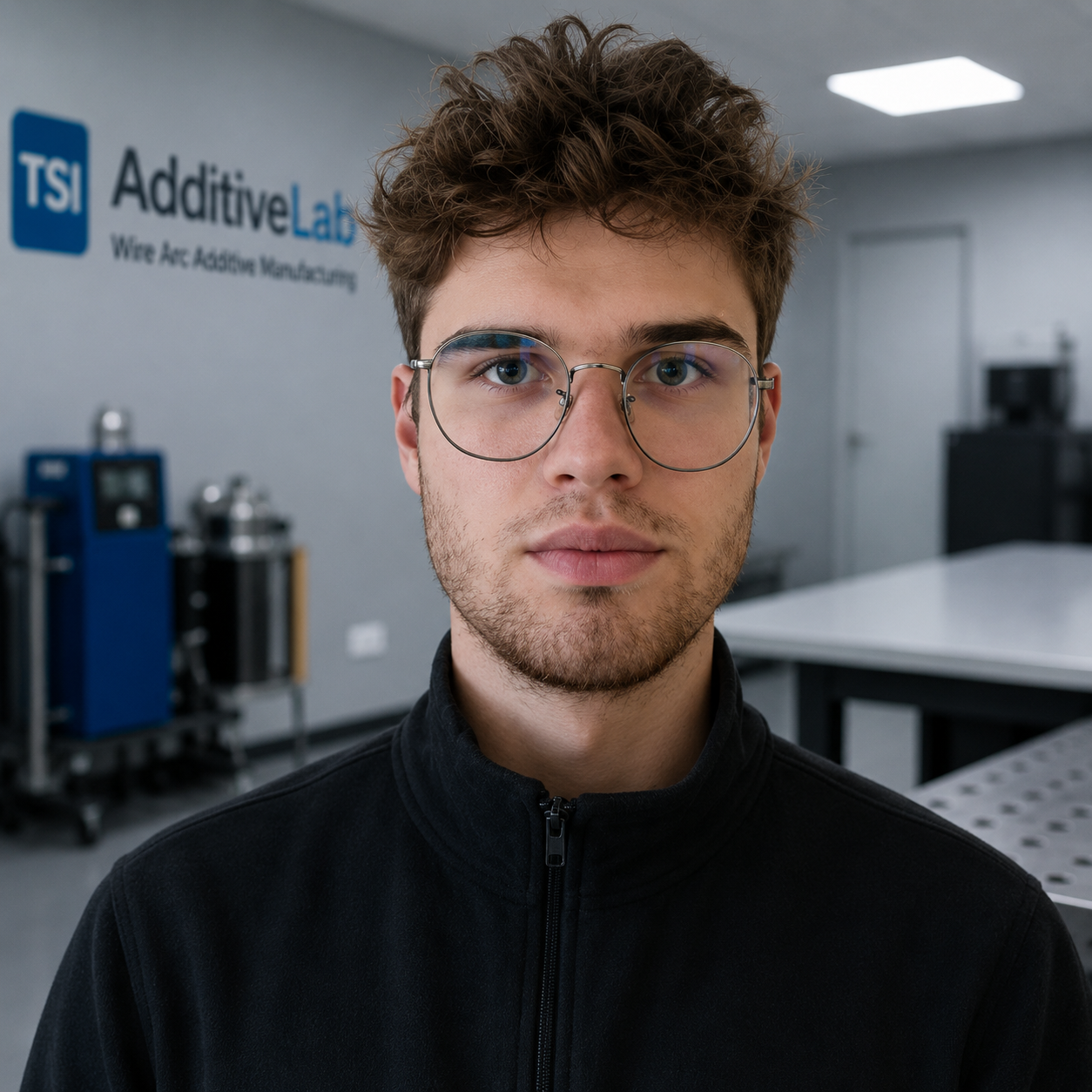
Igors Volohovs
Software Developer
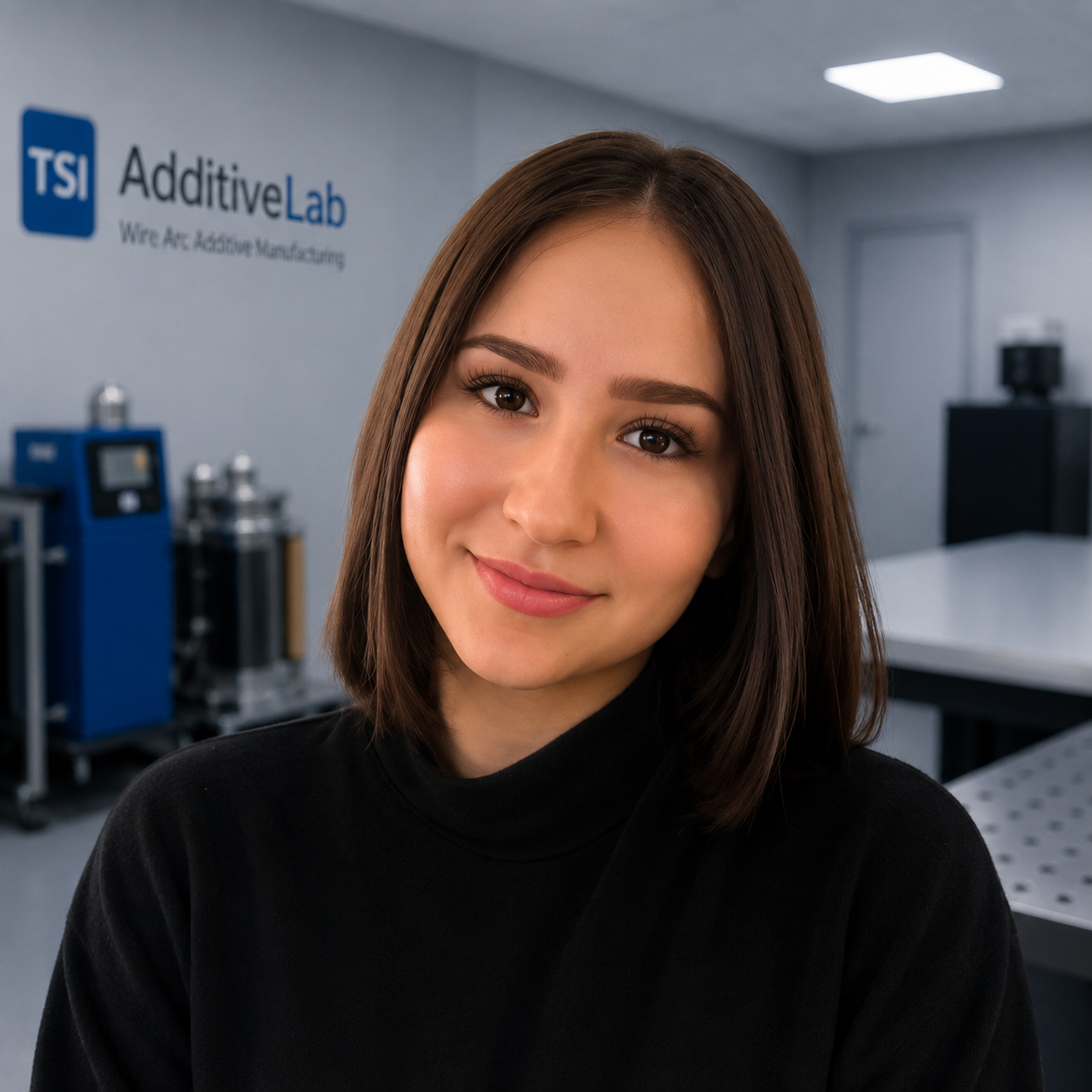
Ksenija Derune
Marketing Intern
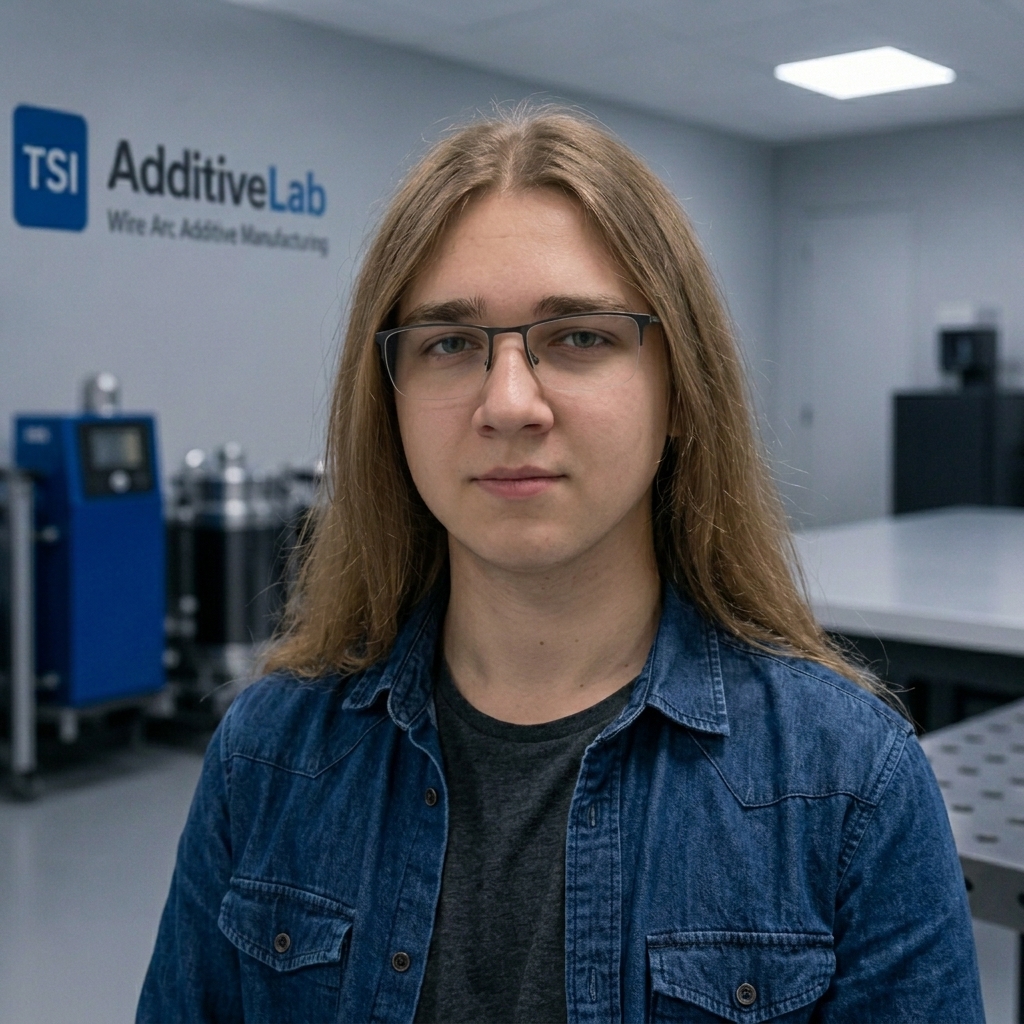
Vadim Žunda
Software Developer Intern
Let's build something together.
Contact us to discuss your project or collaboration idea.